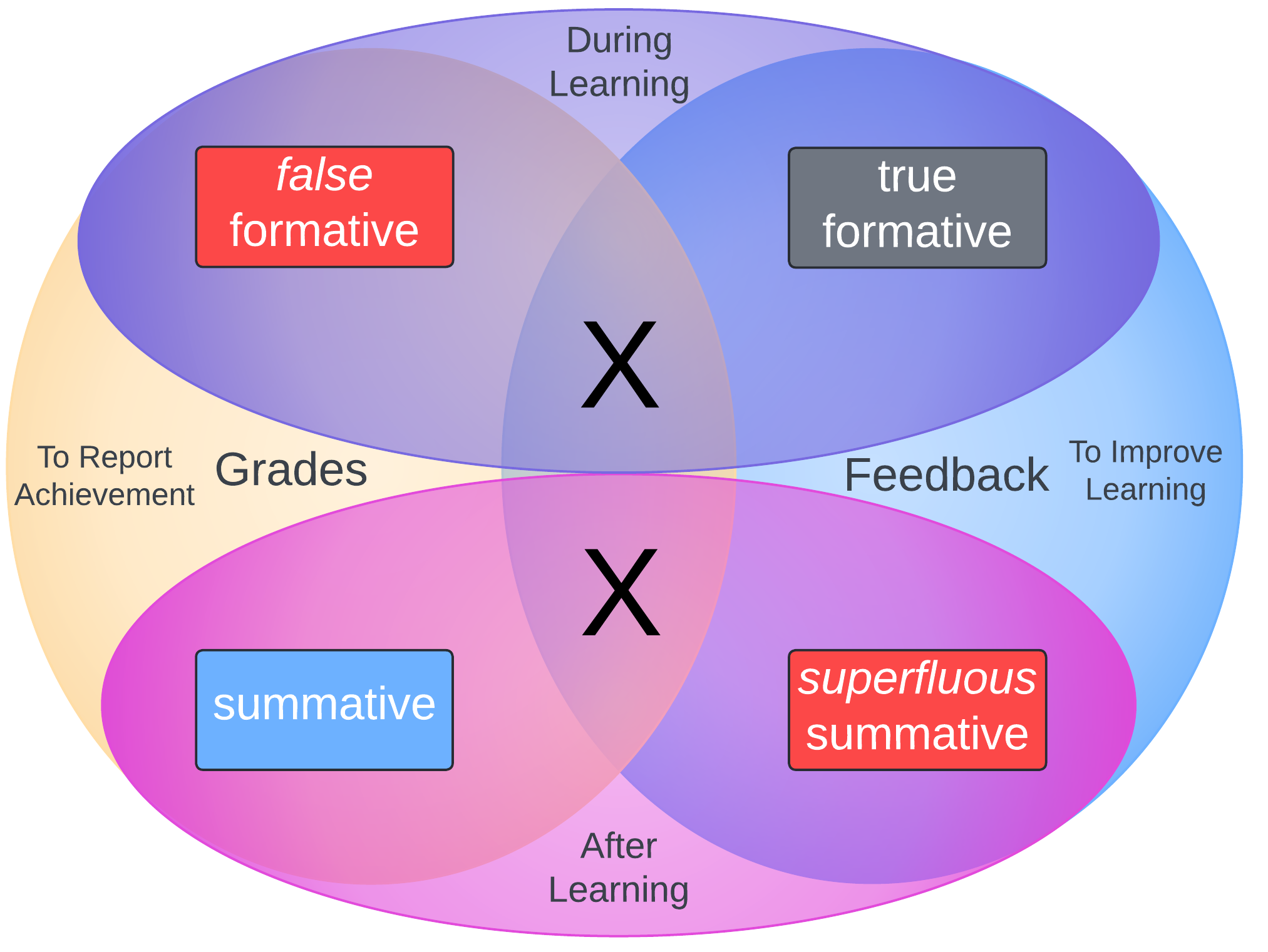
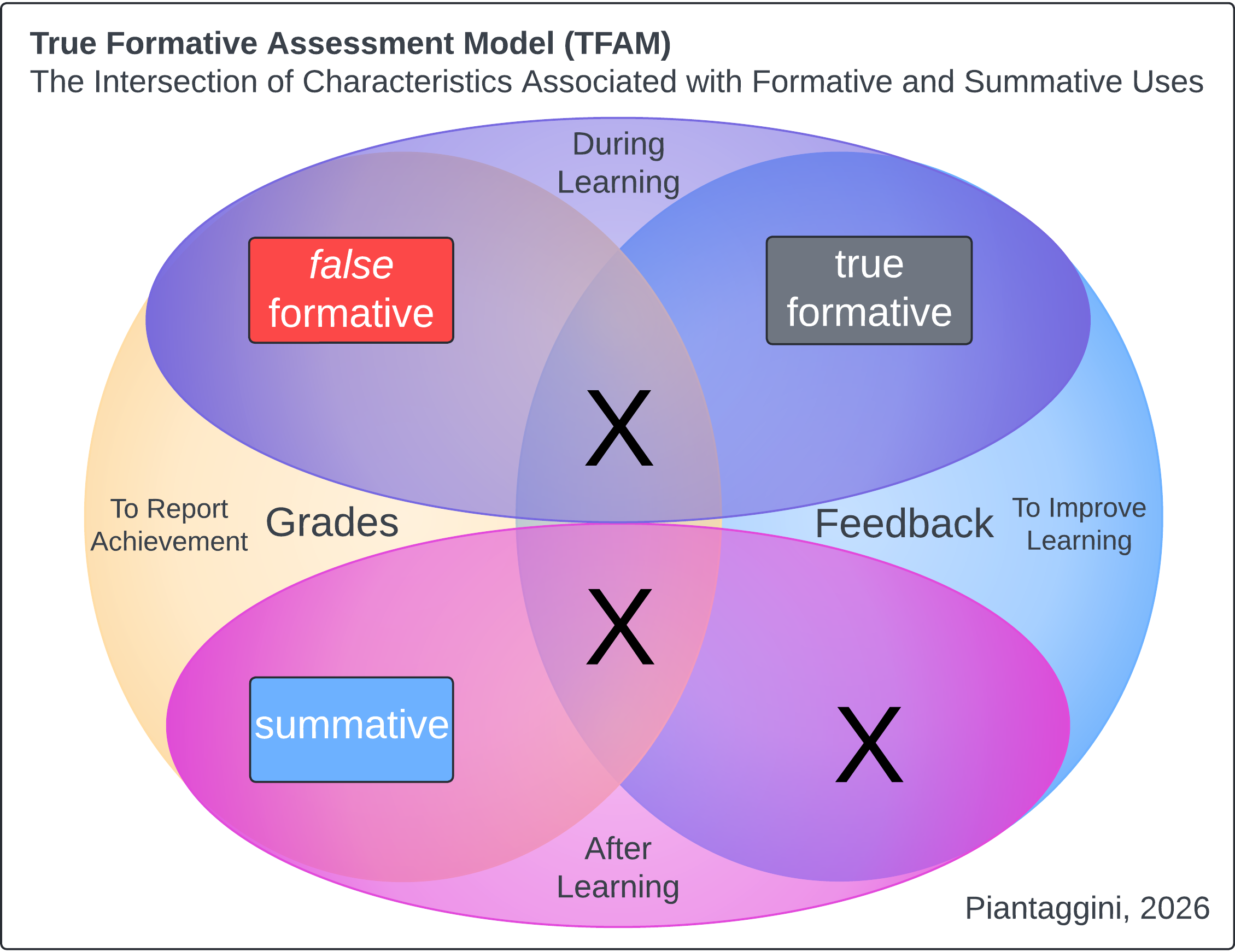
I added the superfluous summative to TFAM back in June, and after the MTA Summer Conference I revisited my TFAM conceptual framework once again. This latest (last?) update is the most complete version yet. I’ve also established Creative Commons licensing as this gets shared around (“CC BY-NC” basically means use this figure, cite me, and don’t make money off of it :)).
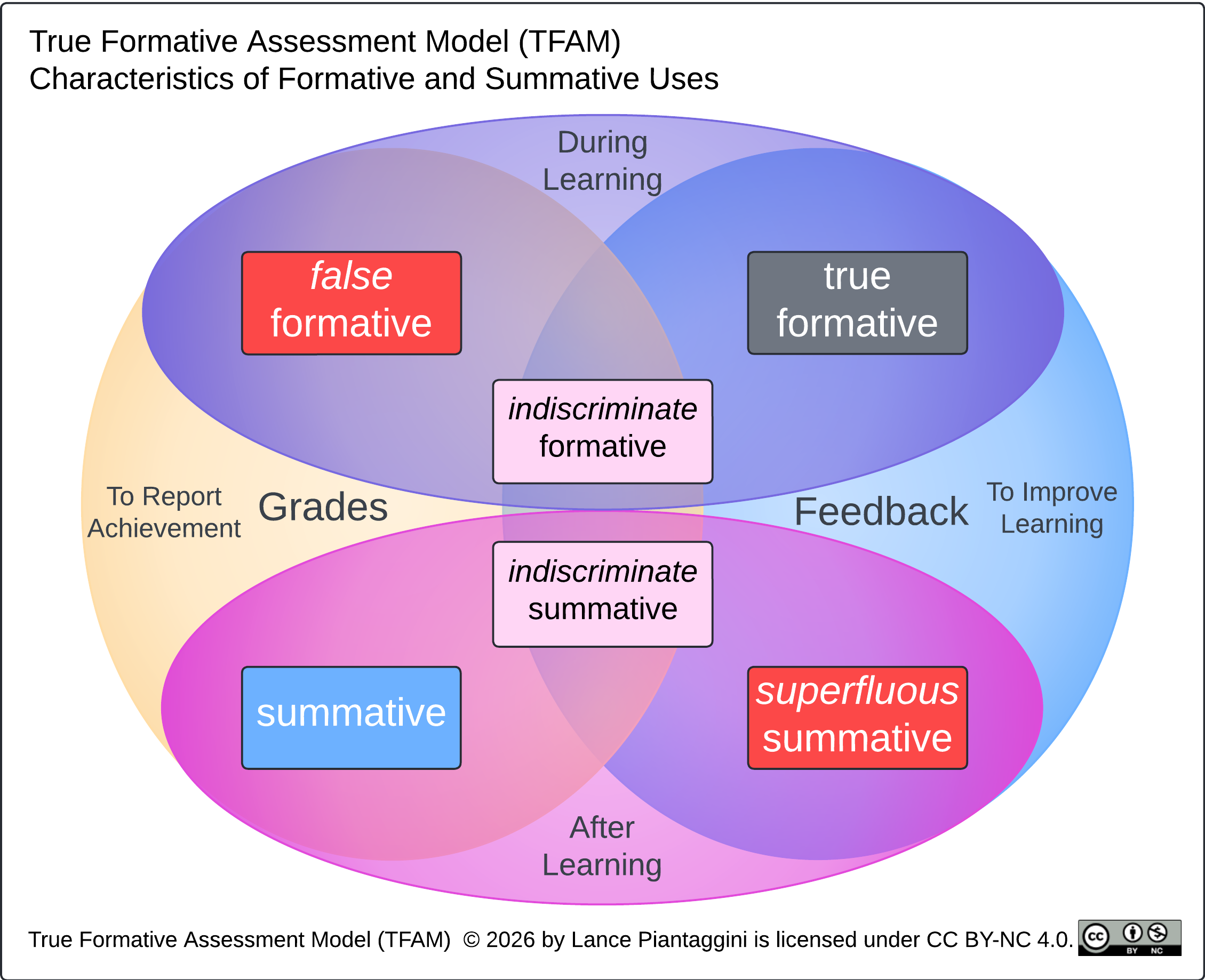
Indiscriminate Assessments
One thing bugging me about the previous version(s) of the TFAM Venn diagram was the “Xs” in the center zones. These represented assessments with mixed formative and summative characteristics. The idea behind those “Xs” was to focus on the other, more impactful zones of the Venn diagram while sending a message to teachers that combining formative and summative characteristics clashes and usually results in neutral outcomes (or at least not devastating ones), instead of the positive ones of true formatives. What I found, though, is that the “Xs” didn’t help me talk about those kinds of mixed assessments with teachers. This was a major limitation since many of teachers’ assessments ended up in these zones when we plotted their characteristics. Furthermore, there often wasn’t any particular reason for mixing formative and summative characteristics. It turns out that most of these assessments were designed that way by chance, without treating formative and summative uses differently…