It dawned on me the other day that everything typically graded in school comes down to behavior, effort, and/or participation. It doesn’t matter what your grading categories are, what you’ve renamed them to be, or what policy supposedly is in place. This is inescapable…
Assessment & Grading & MGMT
RILFA 2018 Presentations & Takeaways
On Saturday at RIFLA, I presented some updates to two NTPRS 2018 presentations. After the conference, I made even more updates based on what we discussed, including MGMT issues each setup decision addresses. I also had the chance to see two presenters.
Optimizing Your Classroom Setup for MGMT – RIFLA 2018
No-Prep Grading & Assessment – RIFLA 2018
Matthew Mangino
- Signals Watching Matthew got me thinking: Have I been using signals?! In the past, we’ve had something for stop, and slow down. Matthew showed us one for faster, but I’ve never had the problem of speaking too slowly! Right now students just raise their hand. I might want to encourage the use of signals more.
- Story Cubes I’ve used these, and written about using them as more of a whole-class brainstorm and input activity. Still, I can now see an additional use for them with “unlocking creativity.” For example, I could roll two cubes under a document camera, and ask if any word comes to mind that could fill in the next story detail I’m asking for. This could be real good. I’ve been noticing how much better an either/or question is (e.g. students choose, or are inspired a third possibility they otherwise wouldn’t have come up with on their own). Matthew’s version was to provide a paper with 9 prompts (e.g. where, when, how many, problem, etc.), distribute the Story Cubes, then ask students about the image they rolled on the cube as well as what story detail they wanted it to fulfill. In his experience, this little bit of structure has helped quite a lot. Matthew also gathered the cubes as rolled, and snapped a pic of all 9. Essentially, this is the class story depicted, which could then be used as a Picture Talk, or some kind of story retell activity.
- “Oooooooooh” Matthew shared the 2016 video of Blaine Ray teaching English in Brazil, and the first thing I noticed was how every time Blaine made a story statement, he cued the “oooohs” from the class. If I had been trained to do this, I’ve certainly forgotten. I like how it kept students engaged on even the most basic of sentences! I think I’ll give this a try.
Viviana Hardy
- The sēx game! Viviana captured our attention with a MovieTalk in Portugues. Afterwards, she shared a host of input-based followup activities. I had forgotten about the game Keith Toda shared. In groups of 3-4, students get a text, as well as a 6-sided die and 1 pencil. They take turns rolling until someone gets a 6, yells out that number in the target language (TL), and begins translating sentences from the text. They continue to do so while other team members keep rolling. Once someone else gets a 6, they grab the pencil from who was writing, and play continues. First to finish wins, or give points for understood sentences and highest points wins.
Why Is Language Class So Different?

It’s taken years to develop my practices, so there’s no reason students should understand them all after 7 weeks. I’m using these comics to reinforce rules & routines, and to help students understand why their language class looks so different from other classes in school.
1) Tests, Quizzes, “Assessments”
When students respond—even non-verbally—it’s like they’ve selected a multiple choice, or completed a fill-in-the-blank test item. Rather than score/”correct” each individual student’s test, the real time interaction provides immediate feedback to everyone in the room. This saves a massive amount of teacher time, typically redundant in nature (e.g. giving the same feedback over and over, possibly resorting to using comment codes, etc.). It’s actually the most natural form of a batch assessment, and it takes place all class long!
There’s no need to give tests when every utterance provides a) me with comprehension data, and b) students with immediate feedback. I do, however, need to train students to listen as if they were taking a test. That’s easier said than done, but not impossible. Aside from maintaining consistent classroom rules & routines that support language acquisition, statements like the ones in the comics help to explicitly connect SLA principles with school expectations in a student-friendly way.

2) Reading Expectations
I don’t give homework, but reading at home is a daily expectation, period. Without a product attached to reading, though, the concept of “we have Latin reading every night” is tough for 9th graders. Surely, I don’t want to contribute to readicide, but students do need it spelled out for them. The math on input is clear. If we spend 10min. reading in class each day, reading at home for another 10min. doubles the input for the whole year.
The power of reading at home cannot be emphasized enough, and reading what is understood is paramount. This means providing students with level-appropriate, or even below-level reading since doing so independently at home lacks any possibility for negotiating and clarifying meaning. Like novellas used for Free Voluntary Reading (FVR), students are able to read far less on their own vs. the support available during whole-class, or partner-reading activities.
Forgetting How To Teach…Again


 Even a teacher who’s been in the classroom for 6 years has only started the school year a maximum of 6 times, and there’s a good chance that none of those years began the same way. That’s not a lot of practice!
As annual amnesia sets in, I do a LOT more scripting, thinking, planning, confusing, etc. all at the start of the year. If Kids lose knowledge after 3 months; teachers lose flow. In fact, I just posted a video to the Latin Best Practices Facebook group sharing how I ended up stuck one day during some Total Physical Response (TPR) I’ve been using as brain breaks. Naturally, I’m more aware of my teaching since there hasn’t been enough time for anything to stack up, so I’ve been thinking about the start to this year… Continue reading
2018-19 Syllabus & Latin Program Mission & Vision
Unless you’re an island of one, a program Mission & Vision is a good idea to keep the department heading in a similar direction, even if things don’t start out that way. I put a lot of time into crafting the document last spring, and just had some help from my admin for the final touches. Once that was squared away this week, I could hand in my 2018-19 Syllabus. Let’s unpack all that…
Grading: A Zero-Autonomy Quick Fix
After reviewing my NTPRS 2018 presentation with someone earlier today, I stumbled upon a way to demystify the concept while also providing an option for immediate implementation without ANY changes to those pesky school-mandated, unchangeable grading categories (if you’re in that unlucky situation). In each grading category:
- Create assignments that do NOT count towards the final grade (usually a check box)
- Create ONLY ONE assignment that DOES count towards the final grade
- Use a—ANY—holistic rubric to arrive at that grading category grade
NTPRS 2018 Takeaways & Presentations


These are my updated presentations from the conference:
No-Prep Grading & Assessment 2018
Questioning Is Core
Optimizing Your Classroom Setup For MGMT
Here are my own takeaways organized by presenter, whether a) directly used by them during the conference, or b) inspired by something similar they did that got me thinking and I’ve adapted:
Picture & Classroom Quick Quizzes
**See a recent post adding the Tense Test**
Picture Quick Quiz
Project a picture, then make 4 True/False statements about it. You could use a screenshot from a MovieTalk you just finished (e.g. choose a random point in the timeline), whatever you were discussing during PictureTalk, or an entirely new image. Here’s an example:
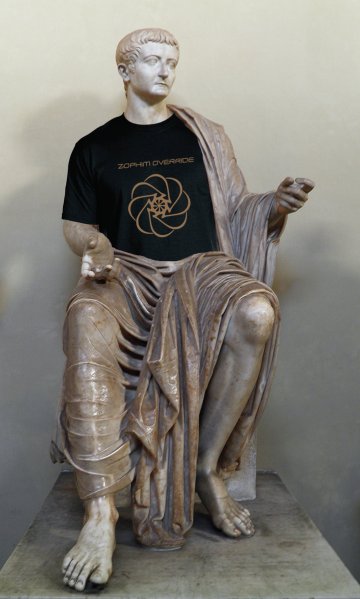
1) The Roman is wearing a shirt.
2) The Roman’s shirt is black.
3) The Roman’s shirt is blue.
4) The statue is seated.
Classroom Quick Quiz
Make 4 True/False statements about anything in the room! Have a map? Say something about a location. Have a Word Wall? Say something about a word. Have furniture? Talk about its size, or shape. Being observed? Talk about that person. Want to walk around? Narrate what it is you’re doing (i.e. TPR).
With the addition of these two, the total no-prep quizzes comes to 5, which you can read more about on the Input-Based Strategies & Activities post:
Quick Quiz
Vocab Quick Quiz
K-F-D Quiz
Picture Quick Quiz
Classroom Quick Quiz
To review, the Quiz process (aside from K-F-D Quizzes) is a) make 4 True/False statements, b) pass out colored pens and “correct” in class (in the target language, with PQA), and c) report the scores in the 0% grading category. That’s it.
Input-Based Strategies & Activities
**Updated 9.30.23**with Reverse Questioning
**Here’s the list of older ones I stopped using**
When choosing the class agenda beyond the Talk & Read format (now Talk, Read & Reread), it dawned on me years ago that I couldn’t remember all my favorite activities. Thus, here are the input-based strategies & activities I’ve collected, all in one place, and that I currently use (see older ones above). Everything is organized by pre-, dum-, and post- timing. You won’t find prep-intensive activities here beyond typing, copying, and cutting paper. Oh, and for ways to get that one text to start, try here. Enjoy!
**N.B. Any activity with the word “translation” in it means translating what is already understood. This should NOT be confused with the more conventional practice of translating in order to understand.**
Continue readingCan-Do Statements vs. Objectives vs. Agendas
Here’s some clarification on related ideas that are often confused:
 Magister P.