Do Now & Text-Generating Routines

Classes feel a bit different this year—to say the least—meeting between just 40 and 44 minutes daily. That certainly doesn’t sound like much time for high school, but it’s growing on me. In fact, I’d even say that this is an ideal amount of time to spend in a second language each day, so no complaints, here. Due to the need for super efficient timing, though, my daily structure now looks like this:

  1. Do Now
  2. Activity 1 (or first part of a longer activity)
    -Brain Break-
  3. READ (independently)
  4. Activity 2 (or second part of a longer activity)

To give you a sense of how this looks, on Tuesday we held the first round of student interviews (i.e. Discipulus Illustris/Persona Especial), students read about last Friday’s basketball game, then I asked questions about what we learned from the student in the spotlight, typing into a Google Doc as students copied the Latin into their notebooks (i.e. Write & Discuss). That was it! Thinking of the class day as two parts is really easy to plan for. Also, since classes meet daily, I’ve decided to alternate activities. This makes the week feel like there’s more variety without adding too much. Here are my alternating daily routines for these first weeks of school…

Continue reading
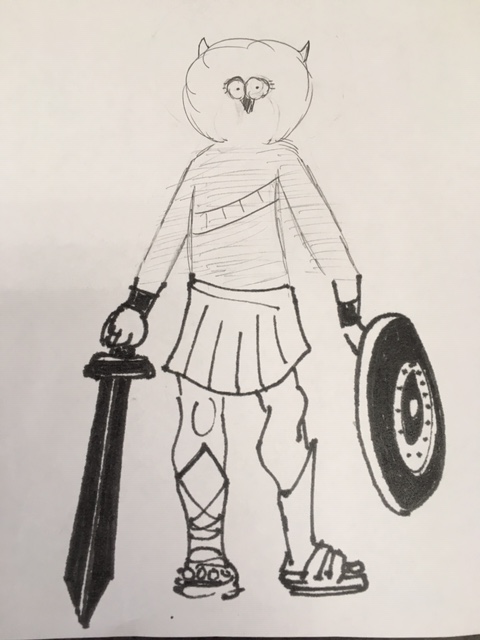
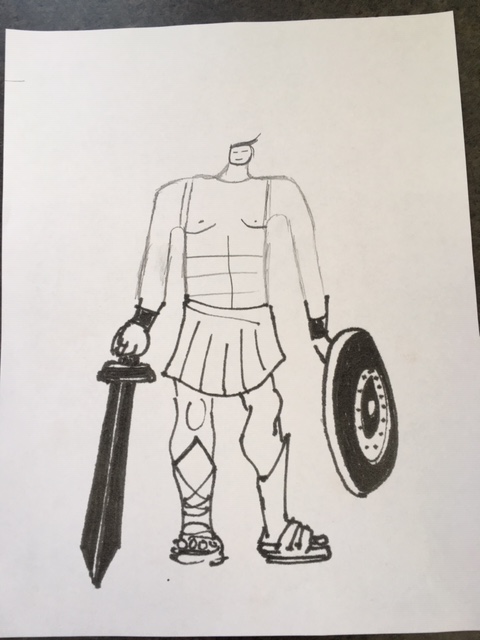
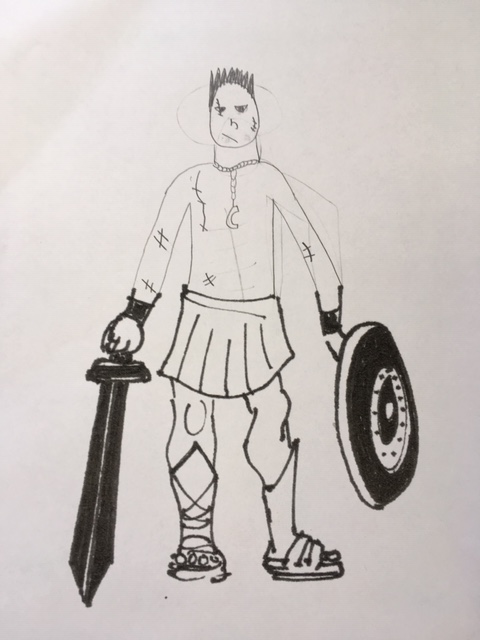
The Cropped Picture Picture Talk Trick!

This trick gets you immediate content to discuss, and then X new drawings (whereas X is the class size) used for other input-based activities.

  1. Get a picture.
  2. Crop it.
  3. Make copies, and have students draw the missing parts.
  4. Project several drawings, and describe them.

For those who have read Rūfus et arma ātra, here’s a large Crixaflamma to print out. Also, input hypermiling combos include:

  • Write & Discuss (or type up on your own)
    • Print and give to students to read (i.e. up to a complete Free Voluntary Reading (FVR) packet of drawings and descriptions).
  • Project as Timed Write prompt (i.e. “Write a story about…”
    • Print and give to students to read (i.e. up to a complete FVR packet of drawings and descriptions).
  • Flyswatter Picture Talk (using two drawings side-by-side)

Writing Requires Focus: Weekly MGMT Sheets

**See these examples of how weekly sheets have been used**

I’ve known for some time that ending class with Write & Discuss is a great way to focus students’ attention on the target language. I’ve also known that a simple dictation is pacifying, albeit boring (hence why I think I’ve done only one of these this year). Both of these activities require students to write, and both of these activities are nearly distraction-free because students have a writing task to do. It comes as no surprise, then, that we should be using writing as a MGMT tool…

Continue reading

Admin-Friendly Sneaky Input Activities

Here are 4 sneaky activities that don’t seem like input at first glance. I call them “admin-friendly” because when there’s conflict over providing CI, it’s usually someone in a position of power who just wants to see the kind of schoolwork that makes more sense/is familiar to them. Unfortunately, that kind of observable schoolwork is output, or something completely non-communicative, or not even in the target language. I must admit that these 4 activities appear output-heavy, but they aren’t, so pay attention…

Continue reading

Timed Write Hypermiling: Copy/Change/Continue

After necessary school-wide policy changes regarding attendance, I was in need of a new “do now” that didn’t feel like one, because I hate that stuff. It turns out a few of my practices work already, though, like Sustained Silent Reading (SSR), Summary & Write, and Free Voluntary Reading (FVR). With 4 classes per week, and a new Semester 2 weekly routine to begin Copy/Change/Continue is born…

Continue reading

Organizing

The most practical daily practices aren’t really taught to teachers. None of us received training in how to best take attendance, minimize the paper trail, organize digital files, or transition between classes. The lucky teachers have found a good system. Unlucky ones are still searching for more efficient systems, or don’t even know that alternatives exist at all! This is a companion post to How To Plan So Your Plans Never Get Messed Up with some tips on organization…

Continue reading

OWI: Compiling Profiles Across Classes & Instant Parallel Characters

Last Friday, I suddenly found myself without a document camera after a Listen & Draw with our first One Word Image (OWI). Realizing my error, I scrambled to snap a pic of just one student drawing, send it to my email, sign in, download and orient, turn on the projector, etc. all just to discuss student artwork. No bueno. Not only did I lose a few kids during the shuffle, but I avoided repeating the process, meaning we looked at just one student’s work. No bueno mas. With a document camera, we used to look at several different drawings easily, keeping interest high throughout class. That absence was obvious, and I was unhappy with how things went. Still, I was determined to use the stack of hilarious drawings somehow…

Continue reading

Card Talk 2 for 1: Double The Input

This year, I’m very on top of providing learners with texts. Each class section has been reading at least a half page of Latin every class, which I’ve also been able to print (all during my planning periods!), and give to learners as reading options at home. These texts also double as what some schools call “Do Now” or “Activators” as the first thing we read in class.


The texts include somewhere between 50-70 total words every day. Since I always print extra copies, I’ve shown learners where to go to get new texts if they’ve already read the ones from their own class. Why would they? Well, the texts from each section has different content written with frequent vocabulary that all learners understand. For those who have read all the texts available from other classes, that’s about 1300 total words after just one week! It’s worth noting that almost all of the content is the product of Card Talk, and a single Picture Talk. These are extremely low prep; the work is just typing up what happened in class, made even easier when doing a Write & Discuss at the end of class. Also, in typing up today’s events, I just stumbled upon a way to double the input from any X Talk (e.g. Card, Picture, Calendar, Item, etc.)…

Extending the concept of parallel texts to Card Talk is an easy way to double the input. Say the day’s prompt is “draw up to 4 things you don’t like, and circle them.” In class, 5-10min could easily be spent comparing two learners, their drawings, and the thoughts of others.

Now, instead of typing up what everyone heard and learned in class, review other drawings and type THOSE up. Project, and/or read using your favorite input-based strategy and activity, and you will have doubled the input in a more communicative and compelling way (vs. reading content that learners already know).

30 Hours & First Novella

With students meeting 1x/week—this year only—we just had the 30th class of the year. I compared this to our calendar for next year, which is as if it’s October 9th meeting every day of the week. Now, with constant reminders of routines (since at least one week passes from class to class), and typical testing/school interruptions, and Northeast snow, those 30 class hours could amount to fewer total hours of input (25, 20, 15?!). Total input hours is tough to calculate, though, so we’ll just stick with 30 for the purpose of this post! What does that mean for reading? Cue the first novella…

Continue reading