Silent Volleyball Reading (3rd hour of Latin)

For me, paired translation activities a) are not speaking activities, and b) have a purpose similar to what Justin Slocum Bailey juuuust wrote about Choral Translation, with confidence building as the primary one. This is week 3 of school, which is also the 3rd hour my students have listened to and read (i.e. received input) in Latin.

Today, I used a new update to the classic ABBA paired translation activity I’ve always known as Volleyball Translation (i.e. the role is tossed back and forth like a volleyball “pass”). This comes from Jason Fritze at NTPRS, and I used it with the following text based on events of last week’s class, which includes:

  • Something funny that happened on that day, specific to each class
  • Details from an Either/Or TPR activity
    • sī tibi placet X, surge, et consīde Pompēiīs (i.e. Pompēiī = right side group)
    • sī tibi placet Y, surge, et consīde Rōmae (i.e. Rōma = left side group).

Continue reading

“Getting Students to Speak” & Min/Max Partner Retells

How do we get students to speak the target language?

Provide input.

At least, that’s what no one disputes, though not every teacher does enough of it. The biggest misconception regarding how to get students speaking is based on the assumption that the goal—speaking the target language—must be part of the process. This makes sense, but we don’t have much evidence to suggest this is true, despite how intuitive it seems. In fact, if you want get all Second Language Acquisition (SLA) technical, in 1995 Merrill Swain—herself—called her own Output (i.e. speaking/writing) Hypothesis “somewhat speculative” (p. 125).

Continue reading

MovieTalk

**Updated 7.31.19**

On June 24th, 2018, Dr. Ashley Hastings asked teachers to stop using “Movie Talk” if they’re targeting vocabulary with the intent that the student WILL acquire what we repeat. Why? It’s antithetical to Hasting’s MovieTalk, as well as Krashen’s theory. If you do that, all it Clip Chat or something. However, the natural repetition from the movie itself, or intent to make oneself more comprehensible (but not cause acquisition), is spot on, and approved under the term “Movie Talk.”

Dr. Ashley Hastings’ original MovieTalk looked a lot different from what we see today from the CI-embracing community. Instead of using short animated clips, frequent pausing, interacting with students via Personalized Questions & Answers (PQA), and reading follow-up texts (actual or parallel), Dr. Hastings would instead played longer segments of feature-length movies while narrating as part of the FOCAL SKILLS program’s Listening Module

Continue reading

Tasks

On Episode 61 of Tea with BVP, Bill explained Tasks a little bit more. He said that Tasks are usually longer term goals, but also added that level-appropriate and input-based Tasks could be given right away. They certainly could be given right away, but they’re also unnecessary. Considering how hard it is to get multiple concrete examples of Tasks, the amount of planning that needs to go into an assortment of Tasks makes me want to set up a retirement countdown timer and hope it goes by in a blink.

Bill uses the terms “Exercises, Activities, and Tasks” to categorize what we do in class as they relate to communication. Exercises are drills, practicing language for language’s sake, which haven’t been shown to significantly contribute anything to a student’s acquisition or learning experience other than anxiety and frustration for most, so I don’t recommend spending any amount of time on them whatsoever. Instead, the majority of time would be best spent on Activities and Tasks, and there’s one major difference between them…

A Task is an Activity that has a purpose.

Continue reading

Writing for the Novice

Writing texts for the Novice isn’t just about novellas. It’s about making Latin more comprehensible, whether typing up class interests to read, editing a student’s ending to a class story, or creating tiered versions of unadapted ancient texts.

Sheltering vocabulary is the most important step of writing for the Novice. As Bill VanPatten mentioned on Episode 61 of Tea with BVP, the Novice student needs multiple encounters of words/phrases as input that repeat throughout.

Continue reading

Texts from First Week/Class

This year, I see my 3 sections of Intro Latin just once per week, but the typical beginning-of-year activities don’t include much reading. Focusing on TPR for the first 10 hours, for example, just won’t work with this schedule. In order to maximize input, reading must be part of their Latin experience from the start, and the texts I give must be hyper-comprehensible. In my last post, I shared the text I’ll project and read to diēs Mārtis (i.e. the Tuesday Latin class) next week.

Today I got thinking more about maximizing the input through reading. It doesn’t have to stop there in class, but I have to be smart about reading assignments for home. I shouldn’t hand them the exact same text and say “go home, read this, and tell someone what it means/write an English summary.” That’s the kind of artificial assignment that feels like busywork, and it is! Let’s face it, students already know the information in there, and would just be reading for reading’s sake which is practicing language for language’s sake.

We need a parallel reading.

I could make something up, but I don’t know the students well enough yet to gauge what they might find compelling. Instead, I’ve combined the texts from the other two sections to give as a reading assignment (e.g. diēs Mercuriī students will get a text with the interests of diēs Mārtis, and diēs Iovis). Here is what diēs Mārtis students get to take home and read (click for Google Doc):

After I project and read aloud the primary text in class, students will have read just under ~500 words of Latin (216 + 269) by the end of their 2nd Latin class! That’s no small sum, and there’s no way this would be possible without a student-centered focus on compelling messages (i.e. what students like, and how that differs or is similar to others), and sheltering vocabulary—in this case focusing on the one verb we used in the last 15min. of the first day class, placet.

On Sheltering
The primary and parallel texts include what appears to be completely unsheltered maxed-out vocab that many of us avoid (i.e. 28 unique words after 1 class?!). Aside from the most important, most frequent words in these texts (e.g. placet, est, et, nōn, quoque), the rest of the unique word count is comprised of “icing words.” With only one verb other than esse, the compellingness of these texts is going to come from the different interests. I have no expectation that students will acquire these words. Some will, but that’s not the point. The point, and purpose of this communication, is to learn something about each other (and it just happens to be in Latin). Besides, most of the icing words are transparent due to the images, and/or obvious cognates (i.e. mūsica, televisiōrum, telephōnulum, colōrēs, mathēmatica, pictūrae, flōrēs, planētae), adding very little to cognitive demand. Comprehension should be quite high for these texts.

Besides, the icing words will not interrupt the flow of students reading, and have a better chance of acting as those hooks to hold their interest. Contrast the texts above with the 22 unique words in the Ecce Romani textbook’s chapter 1 first reading passage of 61 total words in length, in which very few words are used more than once.

First Week…err Day…

I live by the “low-prep/no-prep” mantra. Yes, there’s life outside of school (maybe not if you teach high school ELA, sorry folks), and I enjoy sharing with others ideas on how to regain their personal life back while also being a damn fine teacher. As part of this, I pride myself on having not taken home student work for a few years now.

This first week, however, is different…

I’ve been used to starting the year with a half-day devoted to essential rules, some routines, and that school-required housekeeping stuff. Then, in next 8-10 class days over about 2 weeks, I would get into Circling with Balls (CWB), Total Physical Response (TPR), Discipulus Illustris, not to mention the No-Travel Story Script I was looking forward to trying out. Not this year. I see my students just 1 hour per week, which means those usual beginning activities would take us up through Thanksgiving! That’s simply too slow for he brain craving novelty. Expectations must be lowered. I’m just now recognizing exactly how much lower, too. This first week—one class—had to combine all that housekeeping with only a little bit of Latin…very little. You know what we did? placet (= likes). Yep, that’s it, at least as the only verb, although eī, tibi, -ne?, an, nōn, et, harpastum, minimē, and certē also made appearances. The focus was on just one student, and another parallel student to compare.

Continue reading

Parātus sum

Preparing for the new school year is kind of crazy. I just read how someone feels like they have to “learn how to teach all over again.” This resonates with me. It’s the 5th time asking myself “OK, but what do I DO?!” just before everything starts. I’m preparing to plan a little more than I normally would, at least in the beginning, but really just to sleep well at night. This is exactly like what Jason Fritze mentioned about writing a quick story script ahead of time, even if you plan to roll with compelling diversions and give students most of the control over story details (noted in my NTPRS 2017 Takeaways). I know that once things get rolling I’ll be able to relax, and the daily stress will dissipate. I’m prepared for stress, and in doing so will avoid anxiety. In my first year, another teacher shared with me how he began his 9th year filled with anxiety, and later vowed to prepare enough so that he could replace it with stress. He knew how to deal with stress, but anxiety was too much, even for an experienced teacher. Here’s how I’ve prepared myself for the upcoming year:

Continue reading

Pīsō (latín -> español) Published!

hobodyer-large

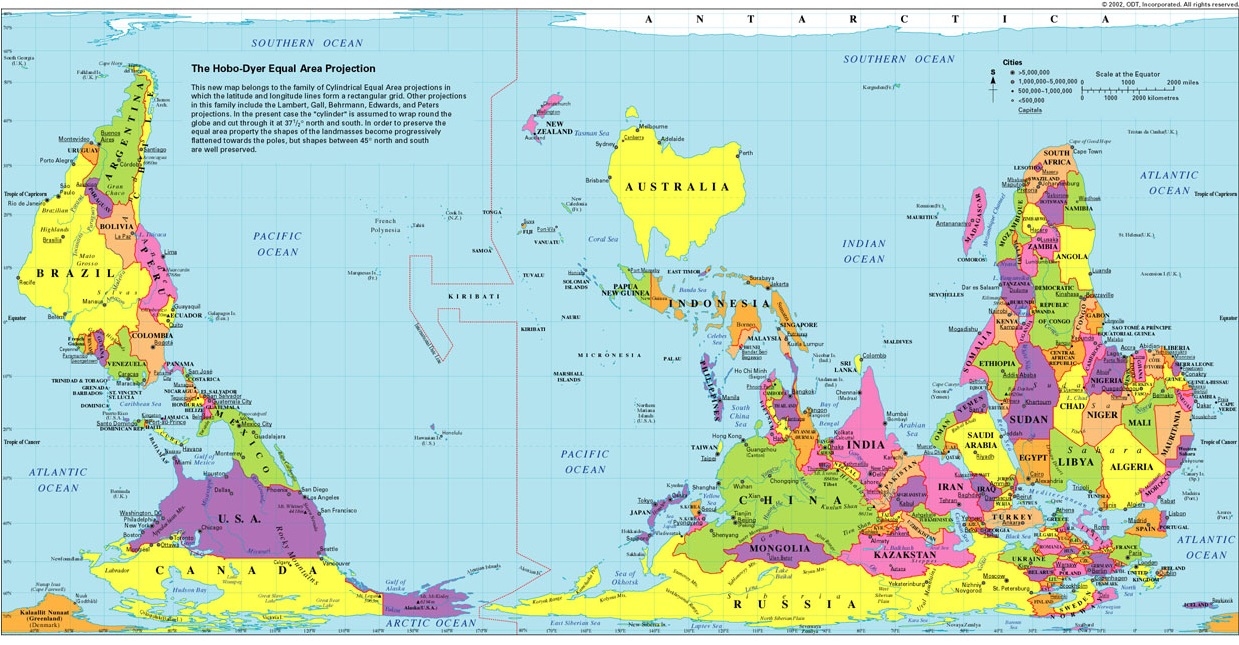
You’ve seen this map, right? Among many things, it’s to remind Western cultures that their historic place in the world doesn’t mean that the continents actually exist as they’ve been portrayed. This was the first image that came to mind when Donaciano Pardo, a Latin teacher in Spain, expressed to me that he wanted his students to read Pīsō Ille Poētulus, but that they didn’t understand English…

Continue reading