The Gladiator Game

This is a lot like Latin Clue!, which was a fun way to end exploring Roman housing, but really only a one-off activity. The Gladiator Game, however, is much simpler, has faster game play, and is more likely to be repeatable. My students did this 2-3 different days over a couple weeks while exploring the topic of Roman gladiators, and reading Rūfus et arma ātra, as well as Rūfus et gladiātōrēs. The basic idea is for students to choose a gladiator’s actions during a fight. In this game, you can take on more of a GM (Game Master) role for no-prep, and maximum flexibility, or set up some things during your planning period beforehand and run it during class.

Either way, you’ll need to determine some details. I’ve found that VERBA cards serve this purpose nicely. Otherwise, determine a list using basic storyasking strategies (e.g. “should there be a lion, or giraffe?”), write them on the board, assign a number to each, and anytime you’d “draw,” instead just roll dice and choose from the list. Perhaps this is best to do after a few times when students have a better sense of the game. How many details? Try 5 for each category and see how long you can play the game. You’ll need…

– gladiator type & name
– opponents
– wounds
– health
attacks

Continue reading

Two Major Assumptions To Be Avoided

A teacher shared with me some class plans to have students find verbs, adjectives, etc. in a text while using no dictionaries (but a grammar reference sheet), then answer *some* questions about comprehension. The purpose was “to see who needs help.” The adjustment? To provide corrective feedback. The expectation? That identifying parts of speech and grammatical forms would improve by the end of the year. There are two major assumptions regarding that intended purpose, adjustment, and expectation, and I’ve seen them before elsewhere:

  1. What is taught is learned.
  2. Personalized *corrective* feedback results in uptake.
Continue reading

The Phenomenon Of Cool: It Can’t Top Silly

“I don’t wanna play your stupid game!” has stayed with me since I heard a grad school professor share an anecdote from early-career teaching. It refers to how even the best-designed activity or cool idea a teacher has can flop instantly in the classroom. When a teacher spends time on that activity or idea, they get mad. Mad teachers resent teaching students. Students resent mad teachers. No bueno.

Cool is not really something a teacher can control for, or at least if they try, they’re likely to fail. Sometimes students deem something that a teacher does cool, but it’s entirely up to them. Most often, though, students reject what is presented as cool, if only to defy and resist. “This game is stupid” is likely to anger a lot of teachers. The trick is to make the game stupid already.

That’s why we need silly.

Continue reading

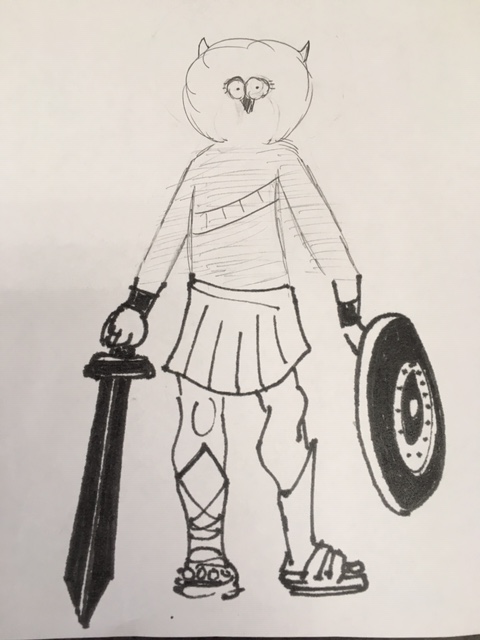
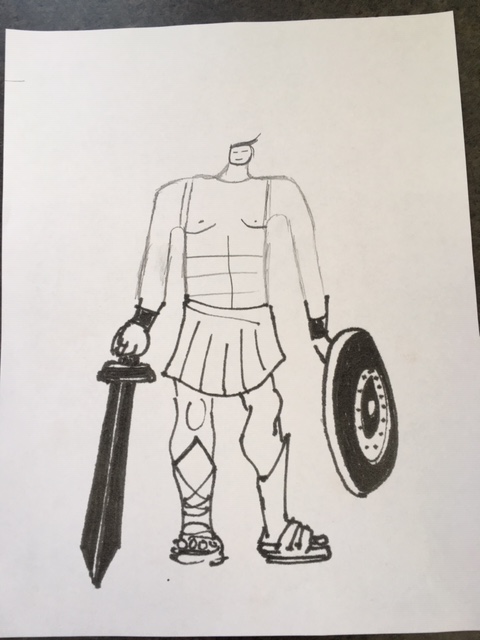
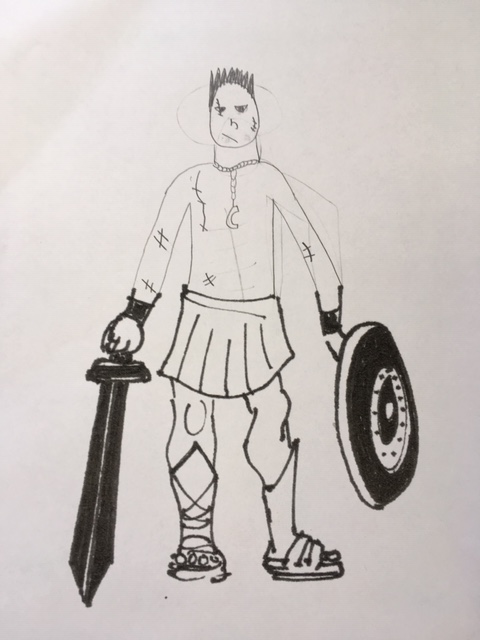
The Cropped Picture Picture Talk Trick!

This trick gets you immediate content to discuss, and then X new drawings (whereas X is the class size) used for other input-based activities.

  1. Get a picture.
  2. Crop it.
  3. Make copies, and have students draw the missing parts.
  4. Project several drawings, and describe them.

For those who have read Rūfus et arma ātra, here’s a large Crixaflamma to print out. Also, input hypermiling combos include:

  • Write & Discuss (or type up on your own)
    • Print and give to students to read (i.e. up to a complete Free Voluntary Reading (FVR) packet of drawings and descriptions).
  • Project as Timed Write prompt (i.e. “Write a story about…”
    • Print and give to students to read (i.e. up to a complete FVR packet of drawings and descriptions).
  • Flyswatter Picture Talk (using two drawings side-by-side)

Rethinking MGMT: No-Prep Gradebook Evidence

Today, I greeted students at the door as usual, waiting for their class password and making a personal connection before class. When the bell rang, I went to my desk, a bit like Vanna White drawing attention to the projected “Do Now!” with the instructions to read a new text I had placed on each seat. After a minute or so, I began walking around with a clipboard marking a) who was reading, b) who wasn’t/who was talking, c) who was coming in late, and d) who was absent.

This went into the gradebook.

Continue reading

Using Novellas: 5 No-Prep Ways To Read

**Check out Using Novellas for a growing collection of ideas**

Teachers have had many questions regarding the use of novellas in the classroom. While the easiest is to simply have them available for students to read, I’ve taken a more cumulative approach to setting aside time for independent reading this year. Here are 5 different no-prep ways to read novellas:

**ALL novellas available for Free Voluntary Reading (FVR)**
1) Whole-Class & Sustained Silent Reading (SSR) Intro
2) Whole-Class & SSR
3) SSR & Expanded Readings (ExR)
4) Audiobook, SSR & ExR
5) Poetry of the Week

Keep reading for a LOT more detail…

Continue reading