The Cropped Picture Picture Talk Trick!

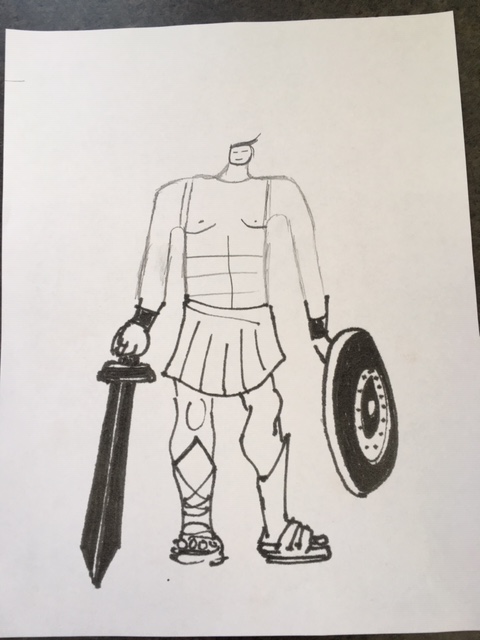
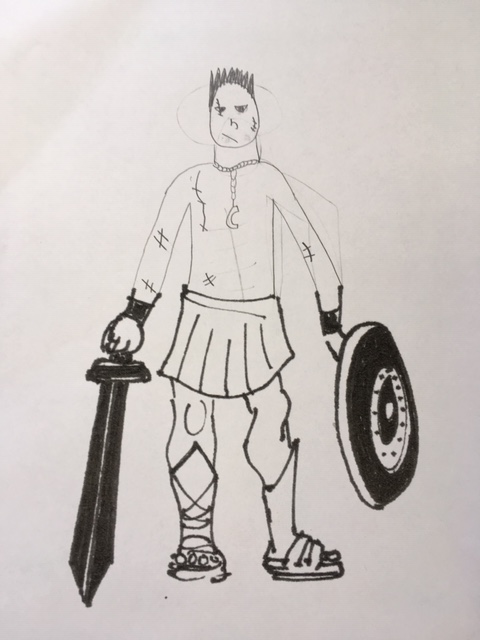
This trick gets you immediate content to discuss, and then X new drawings (whereas X is the class size) used for other input-based activities.

  1. Get a picture.
  2. Crop it.
  3. Make copies, and have students draw the missing parts.
  4. Project several drawings, and describe them.
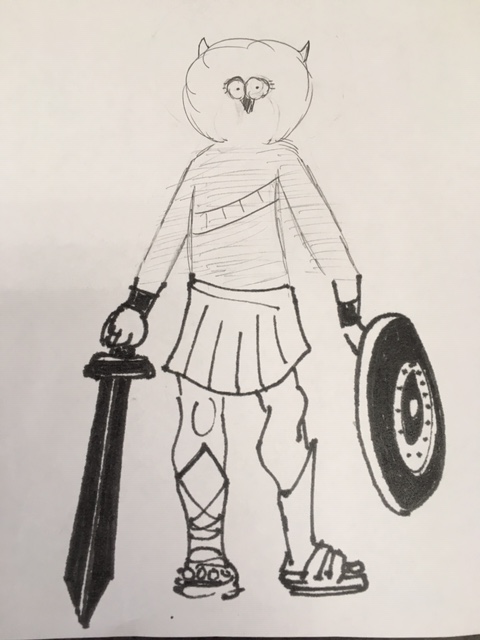
For those who have read Rūfus et arma ātra, here’s a large Crixaflamma to print out. Also, input hypermiling combos include:

  • Write & Discuss (or type up on your own)
    • Print and give to students to read (i.e. up to a complete Free Voluntary Reading (FVR) packet of drawings and descriptions).
  • Project as Timed Write prompt (i.e. “Write a story about…”
    • Print and give to students to read (i.e. up to a complete FVR packet of drawings and descriptions).
  • Flyswatter Picture Talk (using two drawings side-by-side)

Rethinking MGMT: No-Prep Gradebook Evidence

Today, I greeted students at the door as usual, waiting for their class password and making a personal connection before class. When the bell rang, I went to my desk, a bit like Vanna White drawing attention to the projected “Do Now!” with the instructions to read a new text I had placed on each seat. After a minute or so, I began walking around with a clipboard marking a) who was reading, b) who wasn’t/who was talking, c) who was coming in late, and d) who was absent.

This went into the gradebook.

Continue reading

Using Novellas: 5 No-Prep Ways To Read

**Check out Using Novellas for a growing collection of ideas**

Teachers have had many questions regarding the use of novellas in the classroom. While the easiest is to simply have them available for students to read, I’ve taken a more cumulative approach to setting aside time for independent reading this year. Here are 5 different no-prep ways to read novellas:

**ALL novellas available for Free Voluntary Reading (FVR)**
1) Whole-Class & Sustained Silent Reading (SSR) Intro
2) Whole-Class & SSR
3) SSR & Expanded Readings (ExR)
4) Audiobook, SSR & ExR
5) Poetry of the Week

Keep reading for a LOT more detail…

Continue reading

Writing Requires Focus: Weekly MGMT Sheets

**See these examples of how weekly sheets have been used**

I’ve known for some time that ending class with Write & Discuss is a great way to focus students’ attention on the target language. I’ve also known that a simple dictation is pacifying, albeit boring (hence why I think I’ve done only one of these this year). Both of these activities require students to write, and both of these activities are nearly distraction-free because students have a writing task to do. It comes as no surprise, then, that we should be using writing as a MGMT tool…

Continue reading

Hypermiling: Mine!

Having turned my focus to One Word Image (OWI) for the rest of the year, I’m noticing little tweaks that make all the difference. The first tweak is that the entire OWI process works best when limited to 20 minutes. Even storyasking the following day after artwork is presented limited to 20 minutes (e.g. 5 minutes per section in the pic below) keeps everything more comprehensible, compelling, and novel. You might think shorter stories lack input, but that’s not true. Since so many stories can be created, exposure to frequent vocabulary are found in many new contexts, rather than one monster of a story that takes an entire class (or more!) to co-create.

That tweak now a part of my M.O., here’s another one that adds 5 minutes to the storyasking process, but has really helped my students reawaken their imagination, not to mention something that gets X new parallel stories…

Continue reading