One issue that makes Choral Translation boring is the slow, drudging nature of translating word for word. When overused, you can actually hear students dropping out of unison responses. Rather than pulling the “c’mon, guys” pep talk that fails nearly every time, try Fill-In Choral Translation instead…
Continue readingAssessment & Grading & MGMT
Here…We…GO!

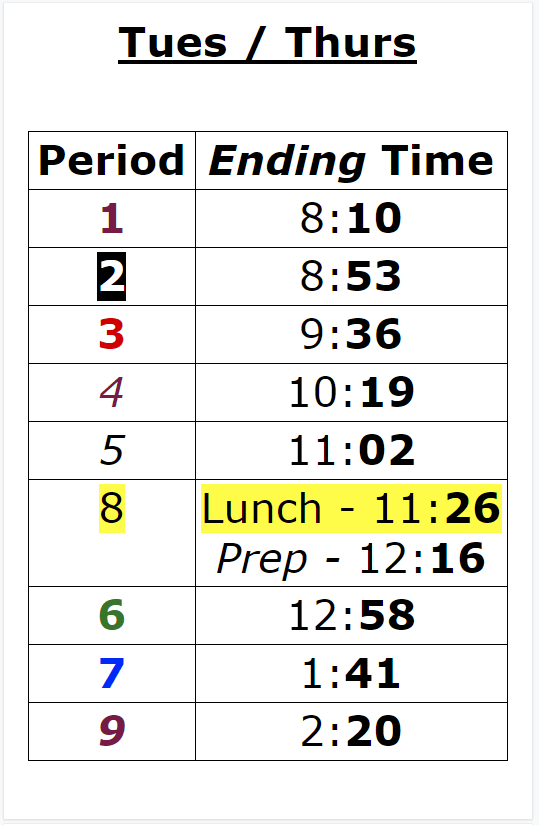
For all my tips, tricks, and sneaky systems, I do a LOT of scripting and detailed planning the first weeks of school in order to feel prepared. Last year, I wrote about “annual amnesia,” and this year is no different. Granted, I’m reaaaaally on top of certain things, like creating a giant colored-coded poster with class END times near the clock to reference while teaching, and other odds ‘n ends. But then there’s Monday…
“What the HELL am I actually going to DO in class?!”
OK OK, it’s not that bad. However, I did need to set aside time to think things through, all outlined in this post…
Continue reading2019-20 Classroom Updates
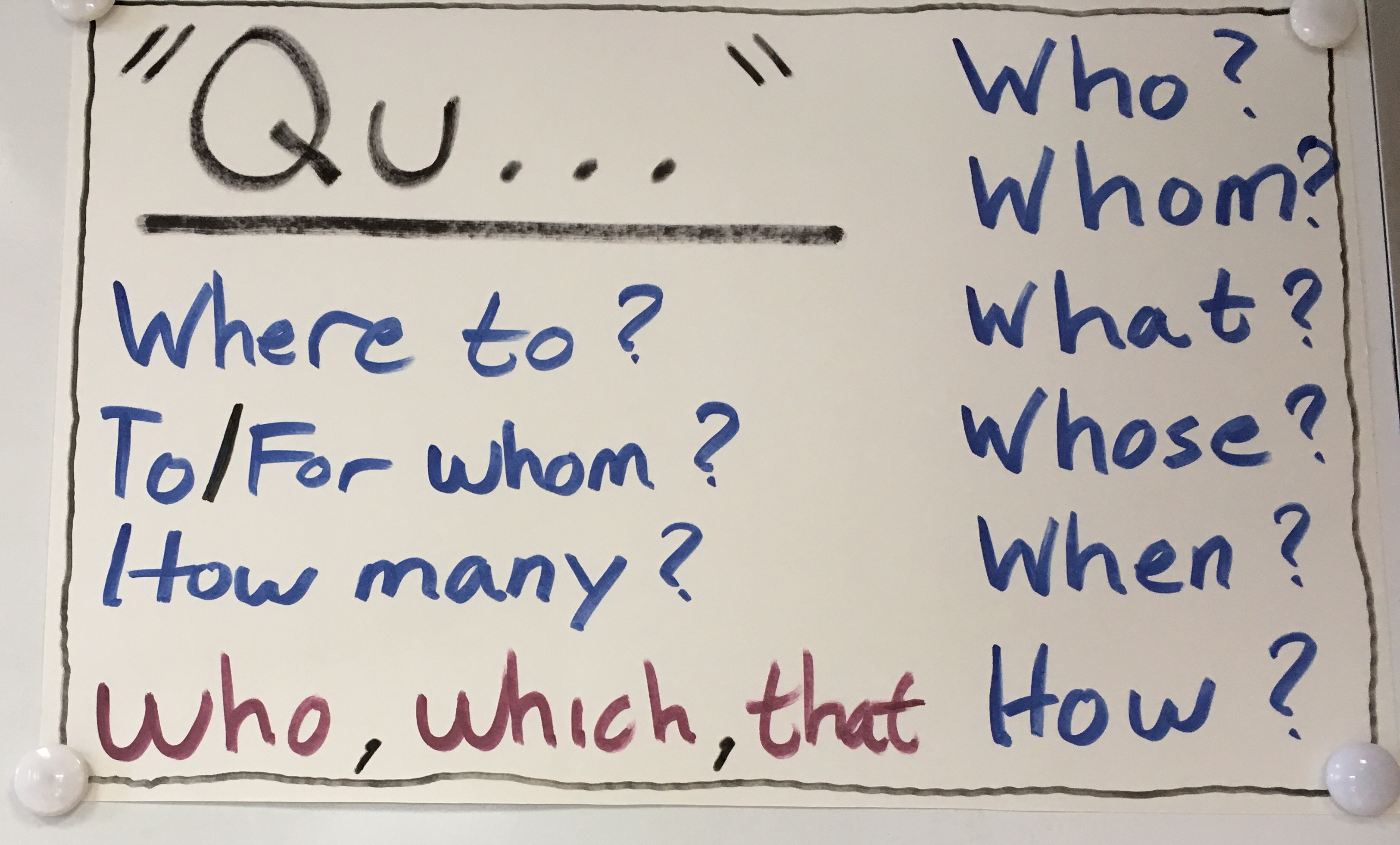
In anticipation of wrenches being thrown at us next week when teachers are officially back, I went into school one morning to set up my room again. Here are updates…
Continue readingCommunication Breaks: Air Spelling, Two Second Turn & Talk, and Cloze
At iFLT 2019, Grant Boulanger paused to have had students close their eyes and spell a word in the air, syllable-by-syllable as he repeated it slowly. Students opened their eyes, and Grant wrote the word on the board, and continued with class.
But why?
Quite simply, this gets students to focus on listening, which Grant mentioned is important since most of what goes on in school makes use of other senses. Also, once the word is written on the board, any “mistakes” literally disappear into thin air. It’s like a fleeting dictātiō!
Consider using air spelling before establishing meaning of a new word/phrase when the class flow could use a short break from the input. In fact, this strategy is part of what I’ve been thinking of as Communication Breaks. These breaks pause or reduce input, allowing students either to think, or briefly interact in ways that lack a communicative purpose. Between these breaks and Brain Breaks, class should be over before students even know it!
Continue readingOpen Coaching Feedback
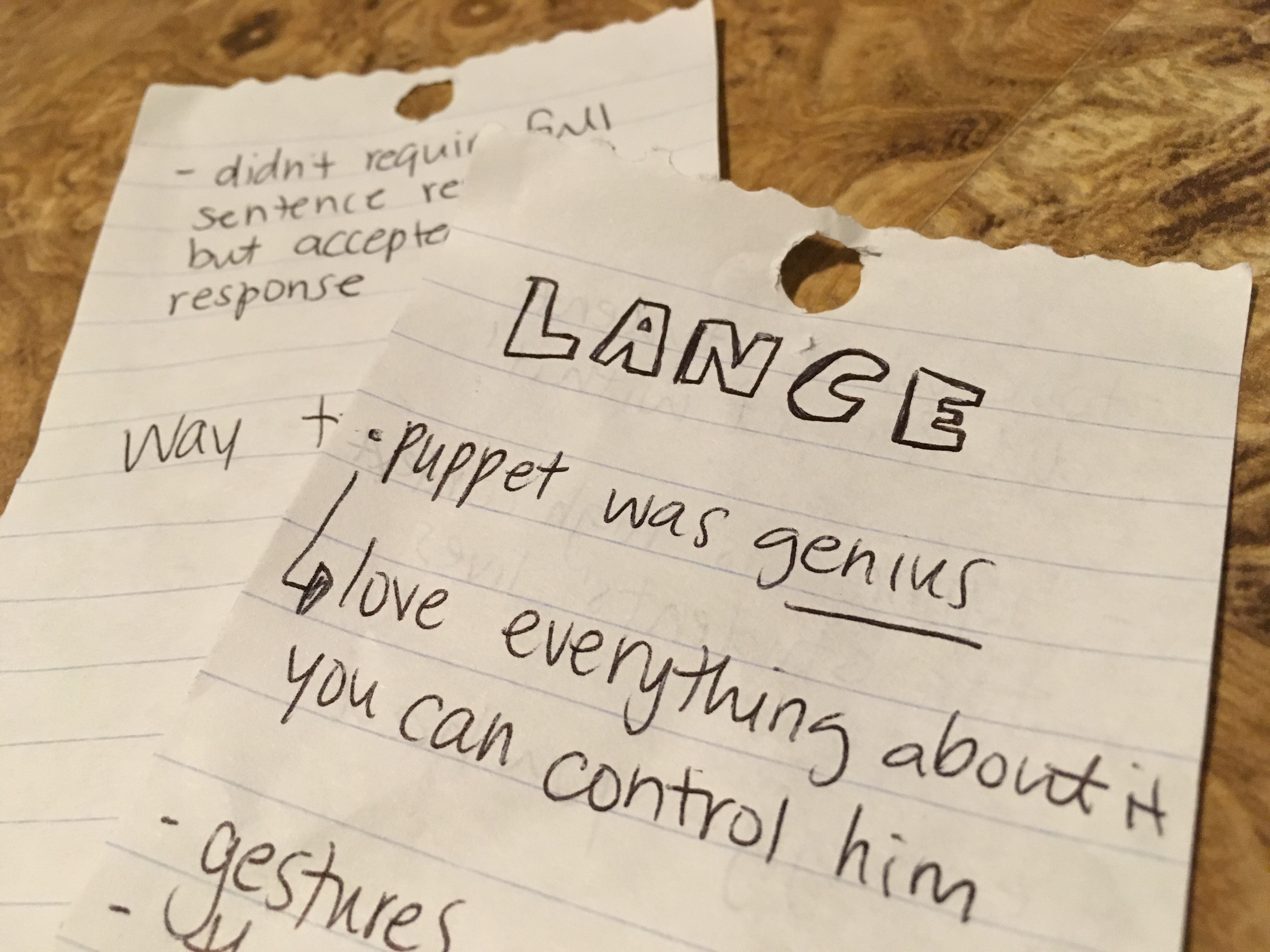
The Open Coaching session I attended at iFLT 2019 led by Michelle Kindt was among my top experiences. If you’ve never participated…
Continue readingIncreasing Focus While Listening: Synonyms & Word Order
One way to get students’ attention is to say something they don’t quite understand. Granted, you need to have solid rules in place for negotiating meaning, and you can’t just unleash a ton of words students don’t know. However, when used judiciously, messing with the input ever so slightly is a handy, level 10 trick…
Continue reading“The message of avoiding grammar is a good one…”
This is the fourth year I’ve been writing about classroom practices that make languages more comprehensible for all students. Recently, one of my replies got quite a bit of support. I’m a little surprised because I haven’t changed my tune, but something in the following simply clicked for people. Perhaps the message contains enough of everything all in one place. I’m not sure. Regardless, I’m sharing it here in case it gets lost in the ether. For context, I replied to comment about both teaching grammar, and providing input:
“Yes it is possible to do both, but you just have to recognize what’s happening when you do. If you like to teach grammar, teach grammar, just don’t expect it to cause acquisition. Input does.
They are two different data sets. In very specific conditions, we can use the grammar data to help communicate. Most people never do. Some people like that. Some hate that. No one actually needs it.
The “grammar is evil” or related message refers to teaching in a way that excludes students, like grading on that separate data set that isn’t necessary for all (but maybe enjoyable for some). Grammar itself isn’t evil, but many teachers unknowingly exclude students because of it.
So, if you include everyone you can, and teach grammar, and they get it, and they’re acquiring, go ahead, please! The message of avoiding grammar is a good one for most teachers until they get to a point of providing enough input and focusing on meaning.”
45,000 Total Words Read!
I had some time during end of the year cleaning, keeping a single copy of each co-created class text, and had fun with counting words. Those texts were also analyzed for vocab in this post. Anyway, I wrote about the solid start to the year up through 55 hours of CI, then the April update at the 100 hour mark. So, here we are at the end of the first year of Latin just 20 classes later (120 total hours of CI). Students have read on their own for 238 total minutes (just under 4 hours) of Sustained Silent Reading (SSR), and 270 minutes (4.5 hours) of Free Voluntary Reading (FVR)…
Continue readingTwo Major Assumptions To Be Avoided
A teacher shared with me some class plans to have students find verbs, adjectives, etc. in a text while using no dictionaries (but a grammar reference sheet), then answer *some* questions about comprehension. The purpose was “to see who needs help.” The adjustment? To provide corrective feedback. The expectation? That identifying parts of speech and grammatical forms would improve by the end of the year. There are two major assumptions regarding that intended purpose, adjustment, and expectation, and I’ve seen them before elsewhere:
- What is taught is learned.
- Personalized *corrective* feedback results in uptake.
The Phenomenon Of Cool: It Can’t Top Silly
“I don’t wanna play your stupid game!” has stayed with me since I heard a grad school professor share an anecdote from early-career teaching. It refers to how even the best-designed activity or cool idea a teacher has can flop instantly in the classroom. When a teacher spends time on that activity or idea, they get mad. Mad teachers resent teaching students. Students resent mad teachers. No bueno.
Cool is not really something a teacher can control for, or at least if they try, they’re likely to fail. Sometimes students deem something that a teacher does cool, but it’s entirely up to them. Most often, though, students reject what is presented as cool, if only to defy and resist. “This game is stupid” is likely to anger a lot of teachers. The trick is to make the game stupid already.
That’s why we need silly.
Continue reading Magister P.