Current Reading: Flexible Deadlines ≠ “No Deadlines” (i.e., Extensions vs. Reassessing)

One concern with flexible deadlines is that in the absence of late work penalties, students will wait until the absolute last, last, last, last, LAST possible moment to turn in their assignments. The fear is that this will create a ton of extra work for the teacher, and that students will not develop time management skills since there are no consequences of a lower grade/reduced points)…because all students in traditional points-based grading systems turn in ALL of their assignments on time, right? And then they graduate and become college students who continue to turn in ALL of their assignments on time, right? And then they graduate and become employees who complete ALL of their tasks on time while being adults who get done ALL of their errands on time, right? All because of low grades and reduced points in school…right? This belief has prevailed despite the lack of empirical evidence to support it. Granted, the fear does seem to play out in some cases when flexible deadlines are misused, or there is some other assessment policy getting in the way. Nonetheless, for any change to take place, this belief must be addressed…

Continue reading

Current Reading: Retakes—When They Do And Don’t Make Sense

My recent review of assessment has continued, which now includes two major findings:

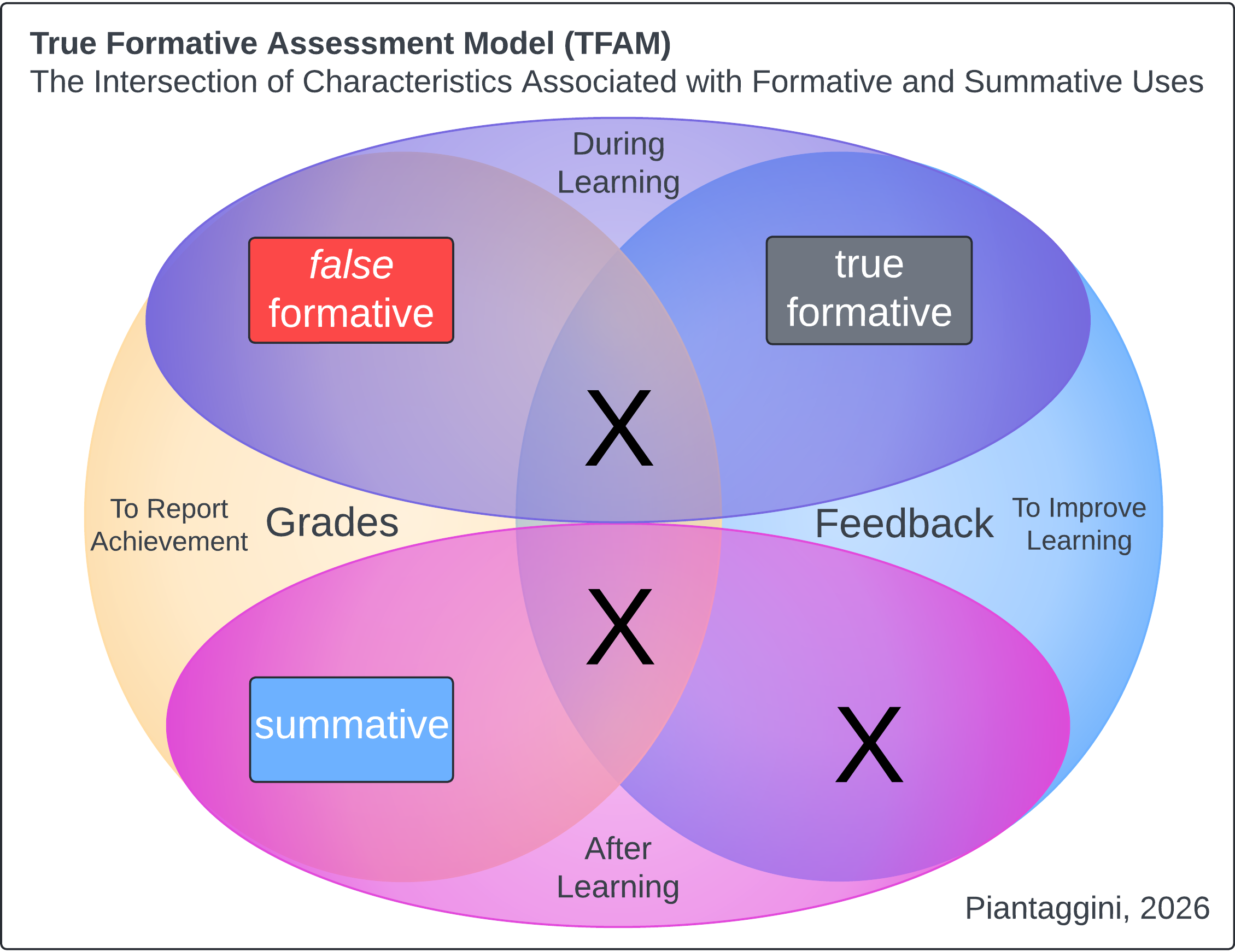
  1. Grading is a summative function (i.e., formative assessments should not be graded).
    (Black et al., 2004; Black & Wiliam, 1998; Bloom, 1968; Boston, 2002; Brookhart, 2004; Chen & Bonner, 2017; Dixson & Worrell, 2016; Frisbie & Waltman, 1992; Koenka & Anderman, 2019; Hughes, 2011; O’Connor et al., 2018; O’Connor & Wormeli, 2011; Peters & Buckmiller, 2014; Reedy, 1995; Sadler, 1989; Shepard et al., 2018; Shepard, 2019; Townsley, 2022)
  2. Findings from an overwhelming number of researchers spanning 120 years suggest that grades hinder learning (re: reliability issues, ineffectiveness compared to feedback, or other negative associations).
    (Black et al., 2004; Black & Wiliam, 1998; Brimi, 2011; Brookhart et al, 2016; Butler & Nisan, 1986; Butler, 1987; Cardelle & Corno, 1981; Cizek et al., 1996; Crooks, 1933; Crooks, 1988; Dewey, 1903; Elawar & Corno, 1985; Ferguson, 2013; Guberman, 2021; Harlen, 2005; Hattie & Timperley, 2007; Johnson, 1911; Koenka et al., 2021; Koenka, 2022; Kohn, 2011; Lichty, & Retallick, 2017; Mandouit & Hattie, 2023; McLaughlin, 1992; Meyer, 1908; Newton et al., 2020; O’Connor et al., 2018; Page, 1958; Rugg, 1918; Peters & Buckmiller, 2014; Shepard et al., 2018; Shepard, 2019; Starch, 1913; Steward & White, 1976; Stiggins, 1994; Tannock, 2015; Wisniewski et al., 2020)

In other words, 1) any assessment that a teacher grades automatically becomes summative, even if they call it “formative” (I’m referring to these as false formatives), and perhaps more importantly, 2) grades get in the way of learning. These findings suggest that best way to support learning is by a) limiting grading to only true summative assessments given at the end of the grading period (e.g., quarter, trimester, semester, academic year), and b) using alternatives to grading formative assessments that otherwise effectively make them summative. Therefore, my next stage of reviewing literature focuses on reducing summative grading and exploring formative grading alternatives (i.e., so they remain formative). As for now, one of those practices *might* be retakes, which has been on my mind ever since I saw a tweet from @JoeFeldman. Given the findings above, which establish a theoretical framework to study grading, let’s take a look at how retakes are used now, and how they could be used in the future, if we even need them at all…

Continue reading