False Formatives

I just presented a poster session in Chicago for the NCME Special Conference on Classroom Assessment (Piantaggini, 2024). While I had some rough details for a proposed dissertation study, the focus of discussion with scholars who stopped by was my new assessment model and the theoretical framework that brought me to it. The message I got was “I think you’re onto something,” so I’m sharing my work here to get more eyes on it. Please contact me with any embarrassingly scathing criticism. Otherwise, reply publicly with any other thoughts or questions. After all, this is my blog, not peer review!

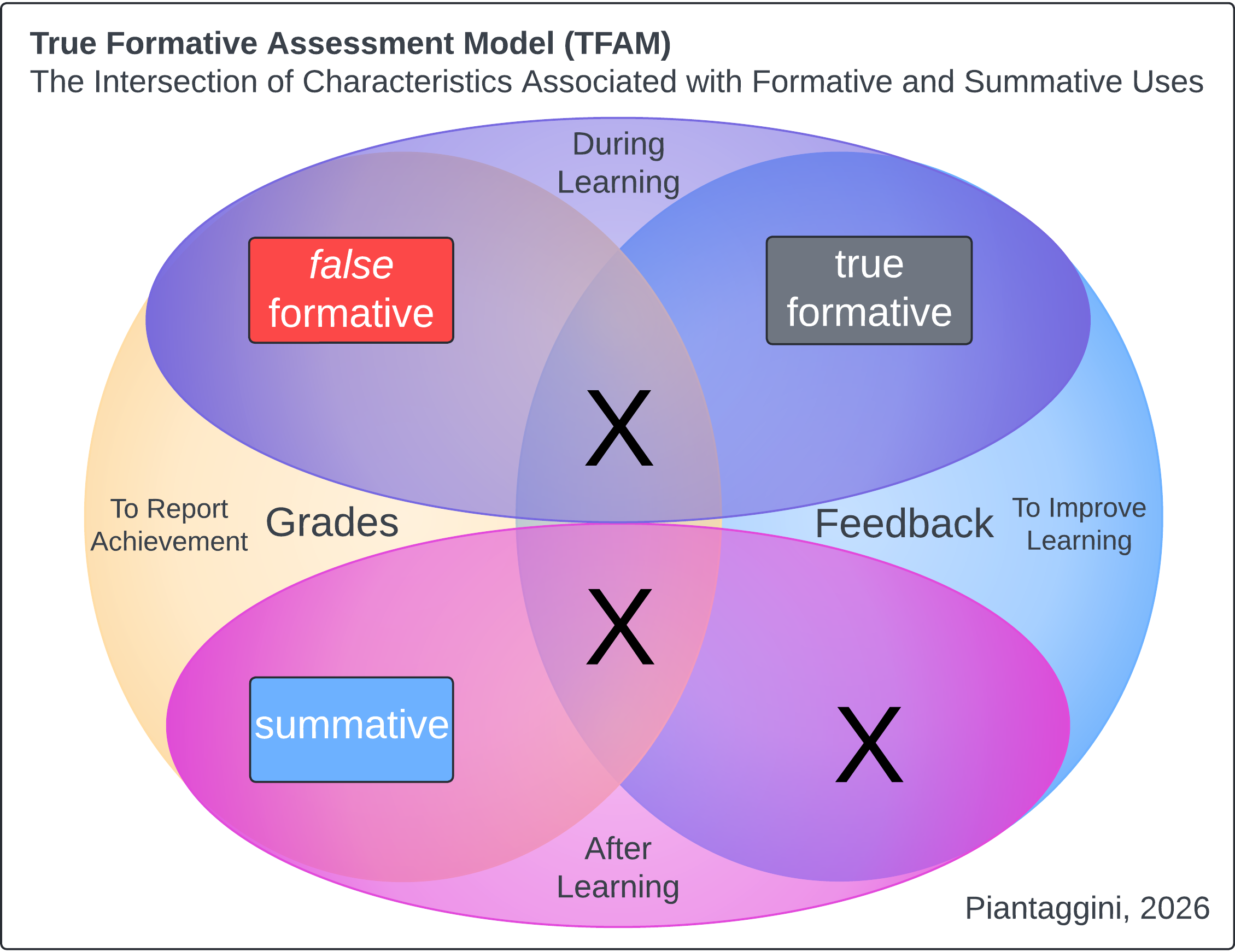
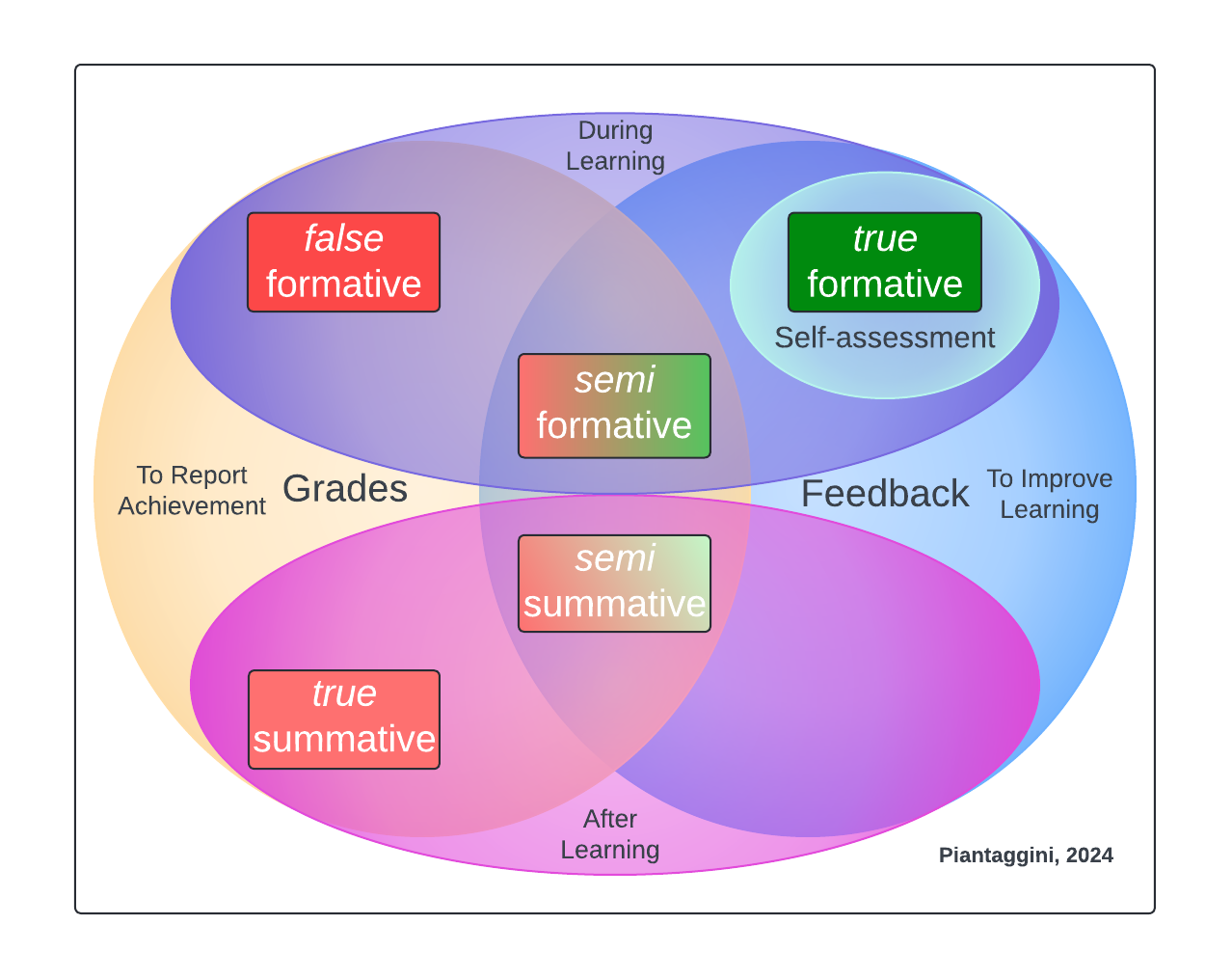
So, in this blog post, I’ll describe the model you see above, and how I got there, starting with a major dilemma I identified when reviewing literature on classroom assessment: confusion over grading formative assessments…

Continue reading

Current Reading: Retakes—When They Do And Don’t Make Sense

My recent review of assessment has continued, which now includes two major findings:

  1. Grading is a summative function (i.e., formative assessments should not be graded).
    (Black et al., 2004; Black & Wiliam, 1998; Bloom, 1968; Boston, 2002; Brookhart, 2004; Chen & Bonner, 2017; Dixson & Worrell, 2016; Frisbie & Waltman, 1992; Koenka & Anderman, 2019; Hughes, 2011; O’Connor et al., 2018; O’Connor & Wormeli, 2011; Peters & Buckmiller, 2014; Reedy, 1995; Sadler, 1989; Shepard et al., 2018; Shepard, 2019; Townsley, 2022)
  2. Findings from an overwhelming number of researchers spanning 120 years suggest that grades hinder learning (re: reliability issues, ineffectiveness compared to feedback, or other negative associations).
    (Black et al., 2004; Black & Wiliam, 1998; Brimi, 2011; Brookhart et al, 2016; Butler & Nisan, 1986; Butler, 1987; Cardelle & Corno, 1981; Cizek et al., 1996; Crooks, 1933; Crooks, 1988; Dewey, 1903; Elawar & Corno, 1985; Ferguson, 2013; Guberman, 2021; Harlen, 2005; Hattie & Timperley, 2007; Johnson, 1911; Koenka et al., 2021; Koenka, 2022; Kohn, 2011; Lichty, & Retallick, 2017; Mandouit & Hattie, 2023; McLaughlin, 1992; Meyer, 1908; Newton et al., 2020; O’Connor et al., 2018; Page, 1958; Rugg, 1918; Peters & Buckmiller, 2014; Shepard et al., 2018; Shepard, 2019; Starch, 1913; Steward & White, 1976; Stiggins, 1994; Tannock, 2015; Wisniewski et al., 2020)

In other words, 1) any assessment that a teacher grades automatically becomes summative, even if they call it “formative” (I’m referring to these as false formatives), and perhaps more importantly, 2) grades get in the way of learning. These findings suggest that best way to support learning is by a) limiting grading to only true summative assessments given at the end of the grading period (e.g., quarter, trimester, semester, academic year), and b) using alternatives to grading formative assessments that otherwise effectively make them summative. Therefore, my next stage of reviewing literature focuses on reducing summative grading and exploring formative grading alternatives (i.e., so they remain formative). As for now, one of those practices *might* be retakes, which has been on my mind ever since I saw a tweet from @JoeFeldman. Given the findings above, which establish a theoretical framework to study grading, let’s take a look at how retakes are used now, and how they could be used in the future, if we even need them at all…

Continue reading