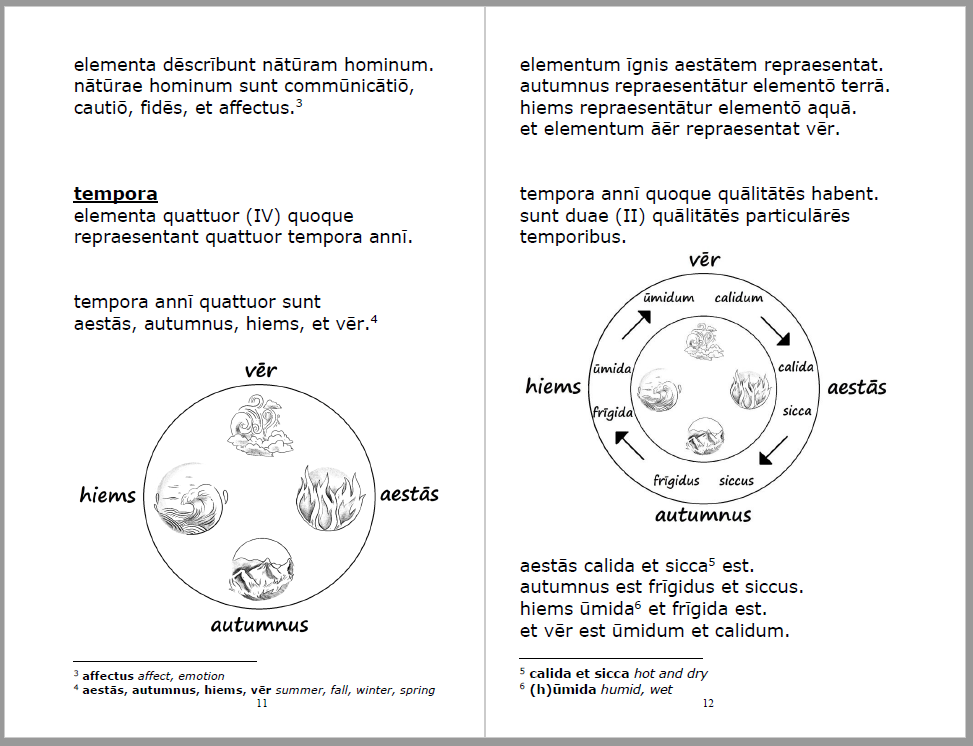
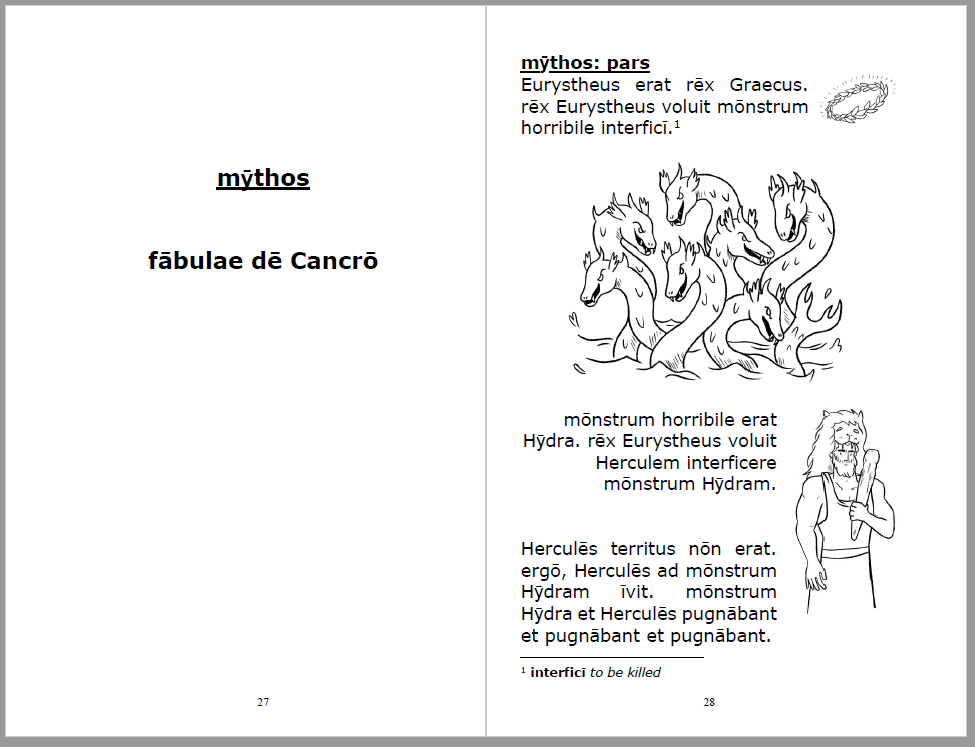
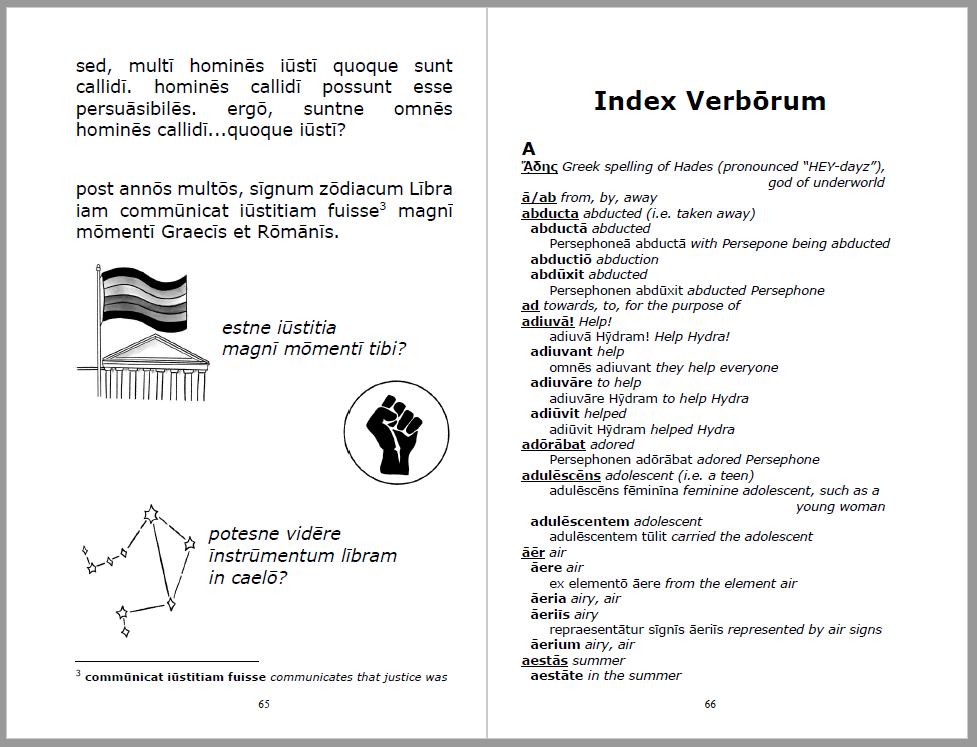
sīgna zōdiaca Vol. 3: Published!

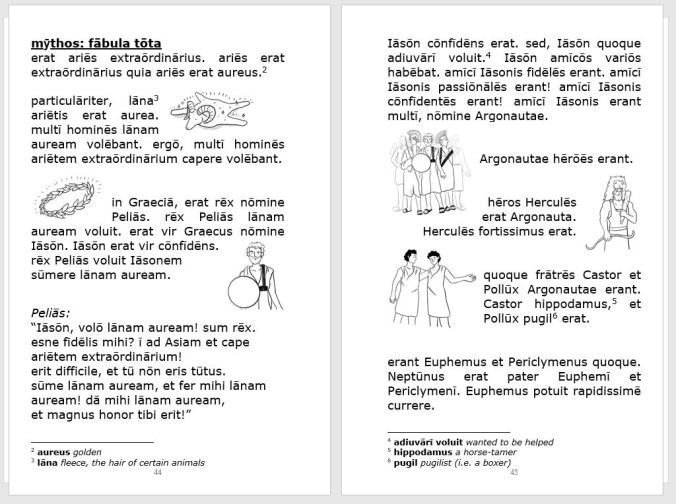
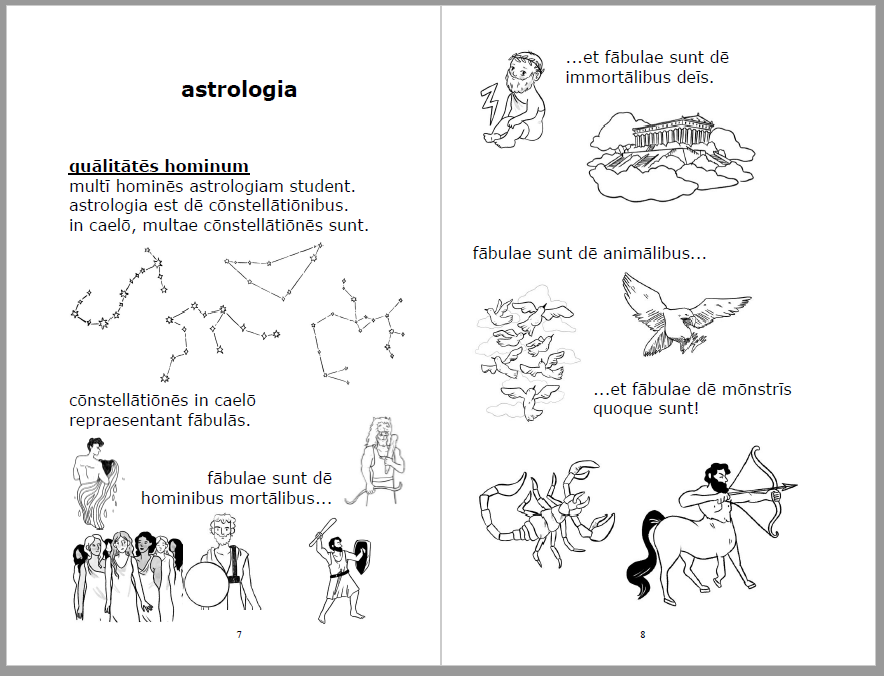
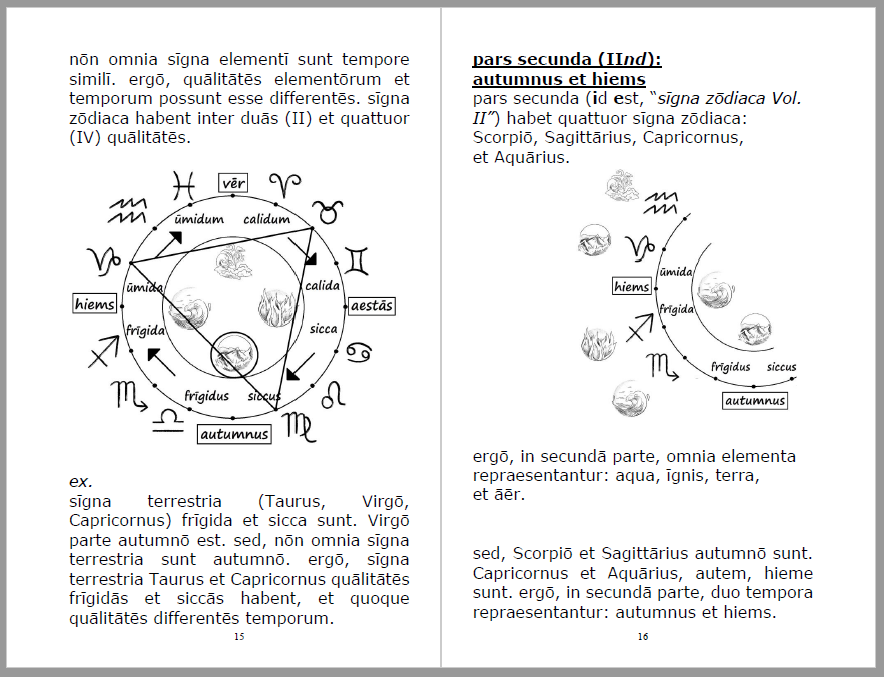
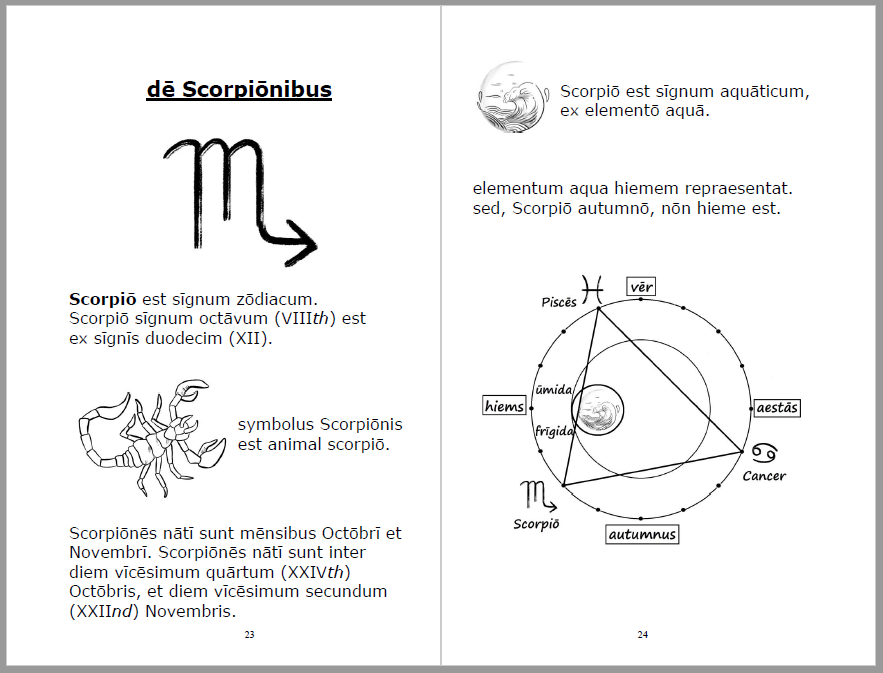
This last of three volumes contains details about Pisces, Aries, Taurus, and Gemini, and features the myths of Typhon, The Golden Fleece, The Minotaur, as well as Castor & Pollux.

Volume III itself contains 62 cognates and 93 other words (excluding names, different forms of words, and meaning established in the text), and is over 3,000 total words in length. The vocabulary across all three volumes comes to 83 cognates and 117 other words. Including all Pisoverse texts, the total number of words written for the beginning Latin student is now just under 65,000 using a vocabulary of just over 800.

Many details in the first four sections of astrologia are repeated from volumes 1 & 2 to provide each reader with a basic understanding of the zodiac signs. sīgna zōdiaca Vol. 3 is available…

  1. For Sets, Packs, eBooks, and Audio—with reduced pricesorder here.
  2. Three-volume-pack special!
  3. Amazon
  4. eBooks: Storylabs & Polyglots
  5. Audio
  6. Free preview (abridged astrologia section, and Piscēs, no illustrations)

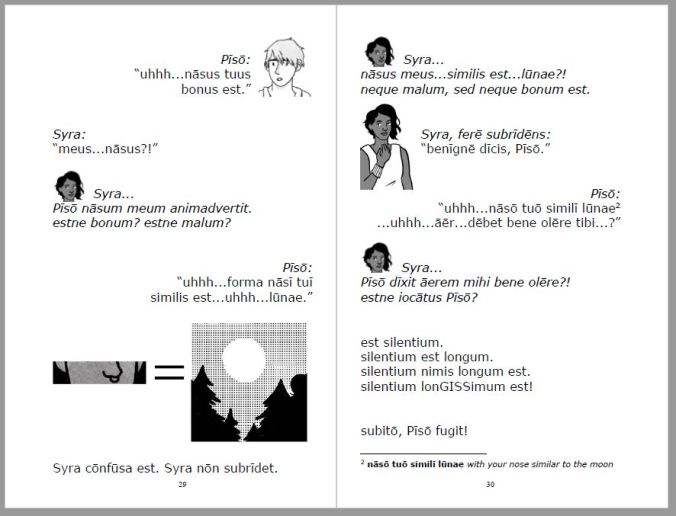
sitne amor? Published!

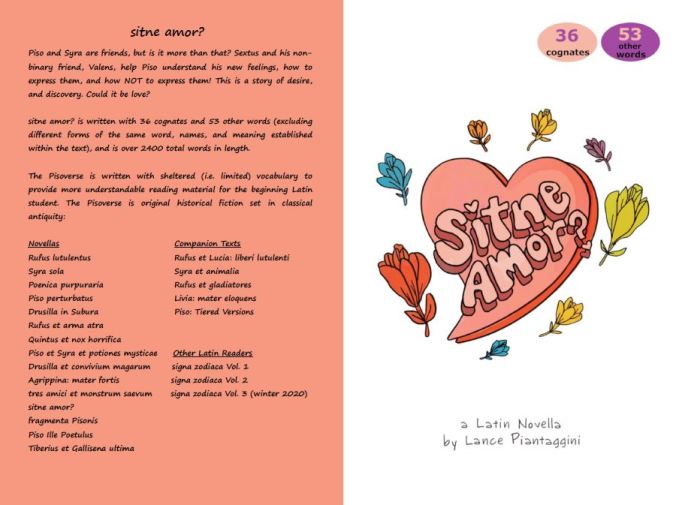
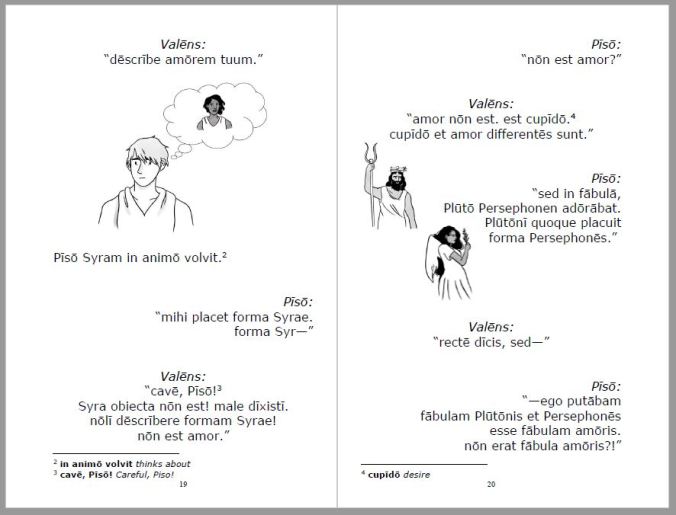
“Piso and Syra are friends, but is it more than that? Sextus and his non-binary friend, Valens, help Piso understand his new feelings, how to
express them, and how NOT to express them! This is a story of desire,
and discovery. Could it be love?”

I hate what I’ve been seeing and hearing in the world, but Yoda warned us of the dark side path—fear to anger to hate to suffering—and no one needs any of that. Lets face it, the only real way to get out of this mess is to strike down hate with love…and humor. My contribution to all that is a love story that takes more of a lighthearted, comical turn. Piso crashes and burns, falling flat on his face, and deals with all the feels of a young adult. I’ll neither confirm nor deny that any of this draws from personal experience.

In sitne amor?, the Pisoverse characters are getting older in their world. This novella picks up on perhaps one of the most mysterious and powerful emotions—love. Ancient Romans and other Latin writers have been obsessed with the topic for centuries. Love is complicated, relatable…timeless. Perhaps that’s why my students requested a love story among their top choices for a next novella. Therefore, it seemed appropriate to write a tale that includes all the blunders of someone trying to figure it all out for the first time, perhaps not unlike many Latin students!

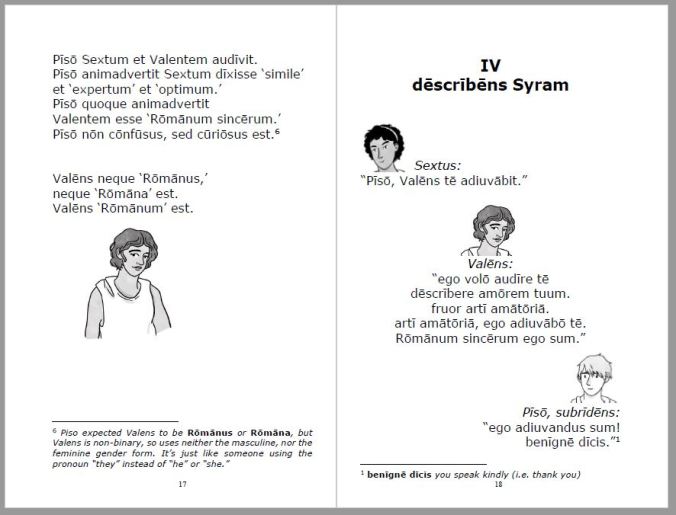
One major reason for writing sitne amor? is an increasing need for students in more diverse Latin classrooms to refer to themselves. Traditional Latin dictionary entries are organized by masculine forms, yet there are plenty of girls, women, and non-binary students looking to express their identity in the target language. Bob Patrick has written that neutrum means “neither,” as in neither masculine nor feminine, therefore its use for non-binary descriptions in Latin is perfect. I’d like to thank my wife Christa Whitney and other members of the LGBTQ community—especially librarian Katharine Janeczek, MLS, whose career focus includes LGBTQ literature—for all their help with this novella. sitne amor? is available…

  1. For Sets, Packs, eBooks, Audio, and Bundle Specials, order here.
  2. Amazon
  3. eBook on Storylabs and Polyglots
  4. Audio
  5. Free preview (Chapters 1-6, no illustrations)

Spooky Season Stories: novellae horrificae

Autumn is probably my favorite season, and Halloween most certainly my favorite holiday. No fancy costume for me this year, but I’ll be reading a spooky tale for sure. You should, too. However, you’ve got just a couple weeks to get one of these books in time to read to students over Zoom (Kindergarten Day reading-style), or along with them via eBooks and PDF. Grab that hot apple cider, get spooky lighting, and scare your students this season!

Quīntus et nox horrifica (Amazon, eBook Polyglots, eBook on Storylabs)
Given its low word count (26 cognates, 26 other), and super short length (1100 total words), this novella can be read within a couple classes, and quite early on. In fact, we’ll start reading it on what will be just the 9th class for first year Latin students! This year, I get to use the new audiobook that came out last spring, which is killer for ambiance. My plan is to read a chapter as a whole class, then listen to its audiobook track, continuing for several chapters, and then switch entirely over to the audiobook on the second class day to finish it out.

Prologue Excerpt
Continue reading

sīgna zōdiaca Vol. 2: Published!

This second of three volumes contains details about Scorpio, Sagittarius, Capricorn, and Aquarius, and features the myths of Orion and the seven sisters (Pleiades), Hercules and Chiron, Jupiter and Amalthea, and Ganymede.

The first two volumes share 84% of vocab.

Volume II itself contains 63 cognates and 92 other words (excluding names, different forms of words, and meaning established in the text). While Volume I has 63 cognates and 84 other words, both volumes share 84% of the same vocabulary (i.e. there are 15 different cognates, and 33 different other words between the two). Volume II is over 2,800 total words in length. Including all Pisoverse texts, the total number of words written for the beginning Latin student is now over 52,300 using a vocabulary of just 762.

Many details in the first four sections of astrologia are repeated from sīgna zōdiaca Vol. I to provide each reader with a basic understanding of the zodiac signs. sīgna zōdiaca Vol. 2 is available…

  1. For Sets, Packs, eBooks, Audio, and Bundle Specials, order here.
  2. Amazon
  3. eBook
  4. Audio
  5. Free preview (abridged astrologia section, and Scorpiō, no illustrations)
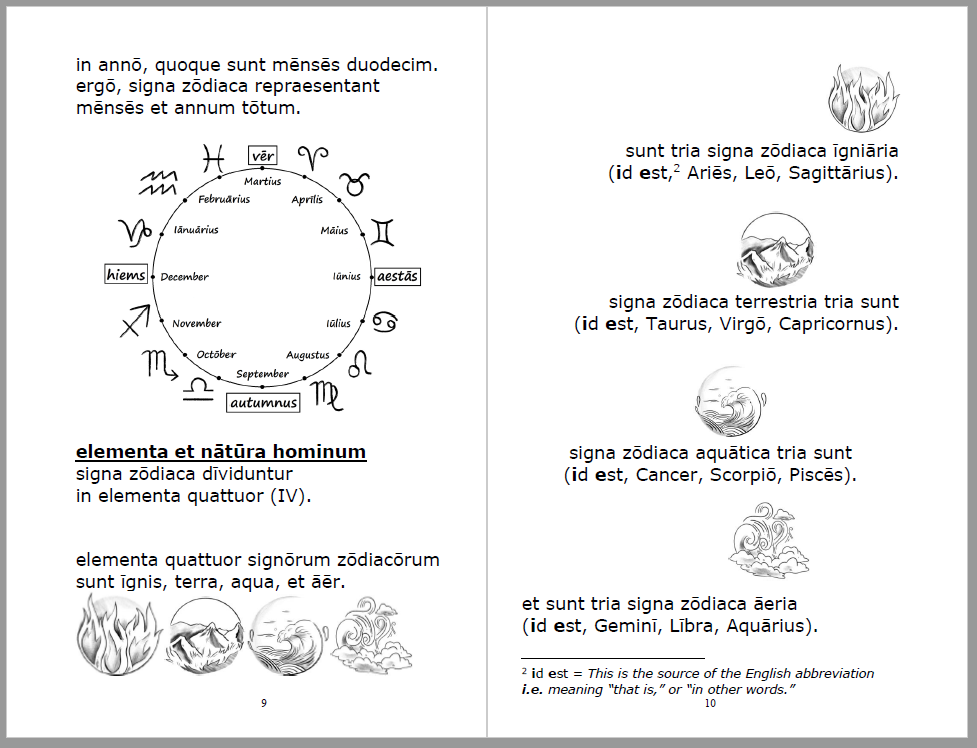
eBook Comparison

**Updated 8.5.21 with Storylabs’ new layout matching the physical book**

All of my books are available on Storylabs, and a selection of them join Andrew Olimpi’s and Emma Vanderpool’s on Mike Peto’s site. These are very different platforms. This post isn’t intended to be a pro/con list. Instead, its purpose is to clearly lay out the features for you…

Continue reading

A Pisoverse Novella Monthly Sequence: 1st Year Latin

Every now and then I get asked which of my novellas students should read and when. Of course, that depends entirely on how novellas plan to be used. However, there *is* a logical sequence to my books, and it’s simple. Although word count isn’t everything, I’ve found that it’s most things when it comes to the beginning student reading Latin. Therefore, reading from low to high word count pretty much as-is (i.e. 20 to 155) makes the most sense.

The only time this appears to go “out of order” is with books having a high cognate count, which I read a little earlier. For example, Quīntus et nox horrifica has 52 words, but 26 are cognates. I’ve read that immediately following Rūfus lutulentus (20 words, just 1 cognate) since the reading level is close due to the similar number of unrecognizable words between the two books. See this post on how cognates increase the likelihood of Latin being understood. In the list below, I’ve also omitted the companion texts used for additional reading, activities, and as independent reading options. However, when used along with a novella, those are just read at the same time (e.g. reading Syra et animālia along with Syra sōla). Here’s the current monthly sequence I have in mind:

Continue reading

Vocab Lists: Sheltering, Grammar Audit, and Creativity

**Updated 8.19.20 – The DCC core list of top 1000 Latin words has just 100 cognates.**

sīgna zōdiaca Vol. 1 was published at the end of July, bringing the total vocabulary found throughout the entire Pisoverse novellas to 737 unique words, of which 316 are found on the DCC core list, and of which 319 cognates (see my last post on cognates), including 52 found on the DCC core list (i.e. Pisoverse cognates account for over 50% of the total DCC cognates). That vocabulary size is quite low for what is now almost 50,000 total words of Latin for the beginner found in 19 books. This is what is meant by sheltering (i.e. limiting) vocabulary. Of course, that sheltering didn’t just happen by chance. There have been many decisions of what to keep and what to let go, the process deliberate, and at times methodical. In this post, I share ways to shelter vocab in novellas, and how those same practical steps apply to more informal writing done in the classroom with students…

Continue reading

Cognate Over Classical & Translation Shaming

High frequency vocab? Yes, of course, although one’s context and goals are important considerations. This posts looks at why we might choose cognates over the kind of vocab more frequently found in unadapted ancient Latin (i.e. Classical Latin), and how that decision can be inhibited by a bit of elitist baggage.

What’s the best reason to use cognates? So the learner who doesn’t read outside of the classroom can understand Latin—in class—more easily. Cognates increase the likelihood of comprehensibility. Even given the range of learner vocabularies in English, the likelihood still increases. That is, there’s more of a chance that a Latin to English cognate will be understood than the chance that a completely unrecognizable Latin word will be understood. Of course, students still misunderstand cognates all the time (re: Mike Peto’s “béisbol” routine), but that’s not the point. The point is to make Latin more comprehensible, and cognates help. N.B. the only cognate-use claim here is a greater likelihood of comprehension. This has a pedagogical impact, to be sure. Choosing cognates over Classical Latin can create a learning environment more like what English-speaking students in Spanish classes experience. Why does this matter? There’s no enrollment problem with Spanish classes—something we cannot say about Latin programs.

Continue reading

sīgna zōdiaca Vol. 1: Published!

Do you like stories about gods and monsters? Did you know that the zodiac signs are based on Greek and Roman mythology? Your zodiac sign can tell you a lot about yourself, but not everyone feels that strong connection. Are your qualities different from your sign? Are they the same? Read signa zodiaca to find out!

Introducing a new series: sīgna zōdiaca! These readers are part non-fiction, and part Classical adaptation, providing information about the zodiac signs as well as two tiered versions of associated myths. This book is the first of three volumes, each with four zodiac signs. Volume 1 starts hot off the heals of the summer, containing details about Cancer, Leo, Virgo, and Libra, and features two labors of Hercules (i.e. Nemean Lion, and Lernaean Hydra), as well as the Pluto and Persephone myth.

Although there’s no single continuous narrative, sīgna zōdiaca has been written just like the Pisoverse novellas with sheltered (i.e. limited) vocabulary. It contains 63 cognates and 84 other words (excluding names, different forms of words, and meaning established in the text), and is over 2,600 total words in length. Oh, and the Pisoverse texts now provide nearly 50,000 total words of Latin for the beginning student, using a vocabulary of under 740, over 43% of which are cognates!

While a growing list of how to use novellas is being shared, a couple uses are specific to this sīgna zōdiaca series. For example, read sīgna zōdiaca as part of a “monthly myth” routine to mark when the zodiac changes. Or, when a student’s birthday comes up, you can read about the details of their sign. Alternatively, if you’ve already planned to read a higher level text of any myths associated with the signs, read sīgna zōdiaca first to provide a bit of scaffolding. Who knows? Perhaps you’ll find out that your original text needs further adapting!

sīgna zōdiaca Vol. 1 is available…

  1. For Sets, Packs, eBooks, Audio, and Bundle Specials, order here.
  2. Amazon
  3. eBook
  4. Audio
  5. Free preview (abridged astrologia section, and Cancer, no illustrations)