This is just one question asked by teachers who feel helpless once encouraged to ditch explicitly teaching grammar. It’s a really good question, and if the answers were obvious, there wouldn’t be as much strife…
Continue readingAuthor: magisterp
The Phenomenon Of Cool: It Can’t Top Silly
“I don’t wanna play your stupid game!” has stayed with me since I heard a grad school professor share an anecdote from early-career teaching. It refers to how even the best-designed activity or cool idea a teacher has can flop instantly in the classroom. When a teacher spends time on that activity or idea, they get mad. Mad teachers resent teaching students. Students resent mad teachers. No bueno.
Cool is not really something a teacher can control for, or at least if they try, they’re likely to fail. Sometimes students deem something that a teacher does cool, but it’s entirely up to them. Most often, though, students reject what is presented as cool, if only to defy and resist. “This game is stupid” is likely to anger a lot of teachers. The trick is to make the game stupid already.
That’s why we need silly.
Continue readingThe Cropped Picture Picture Talk Trick!
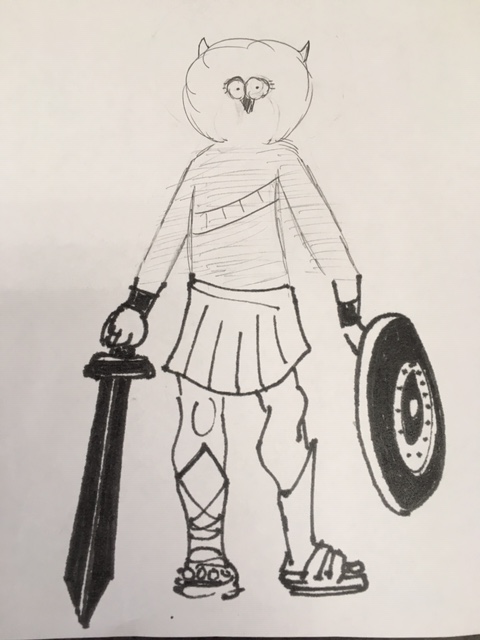
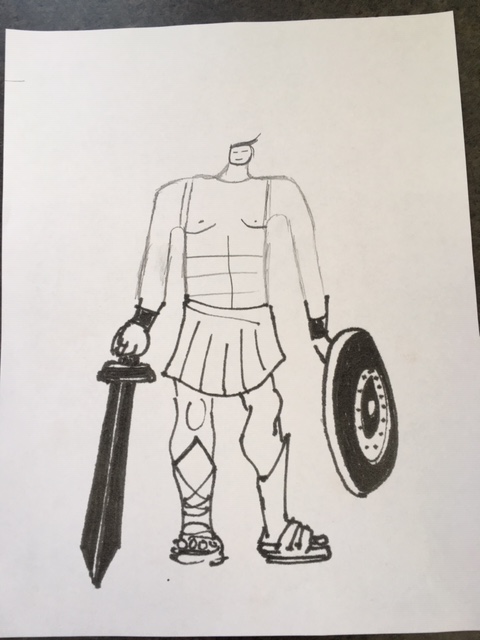
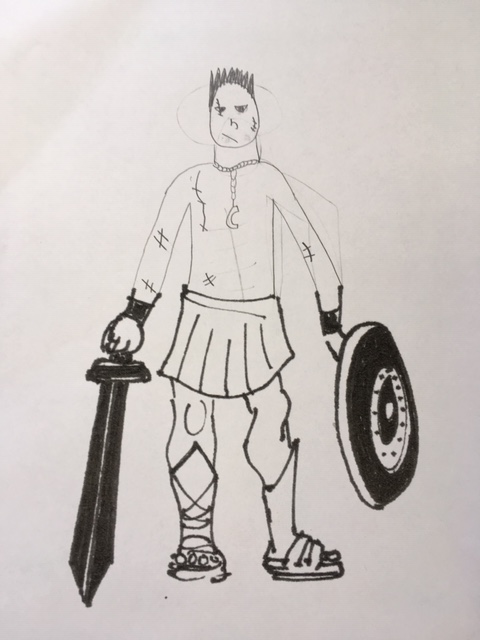
This trick gets you immediate content to discuss, and then X new drawings (whereas X is the class size) used for other input-based activities.
- Get a picture.
- Crop it.
- Make copies, and have students draw the missing parts.
- Project several drawings, and describe them.


For those who have read Rūfus et arma ātra, here’s a large Crixaflamma to print out. Also, input hypermiling combos include:
- Write & Discuss (or type up on your own)
- Print and give to students to read (i.e. up to a complete Free Voluntary Reading (FVR) packet of drawings and descriptions).
- Project as Timed Write prompt (i.e. “Write a story about…”
- Print and give to students to read (i.e. up to a complete FVR packet of drawings and descriptions).
- Flyswatter Picture Talk (using two drawings side-by-side)
37,000 Total Words Read!

I wrote about the solid start to the year up through 55 hours of CI. We’re now at the 100 hour mark. Students have read on their own for 187 total minutes of Sustained Silent Reading (SSR), and 150 minutes of Free Voluntary Reading (FVR)…
Continue readingDiscipulus Illustris 2019-20
I’ve gone through and updated Special Person with 21 questions that my students were most interested in this year. Also, a new format now includes just the question, and a short response starter (but not 3rd person). Download and enjoy!


Rethinking MGMT: No-Prep Gradebook Evidence
Today, I greeted students at the door as usual, waiting for their class password and making a personal connection before class. When the bell rang, I went to my desk, a bit like Vanna White drawing attention to the projected “Do Now!” with the instructions to read a new text I had placed on each seat. After a minute or so, I began walking around with a clipboard marking a) who was reading, b) who wasn’t/who was talking, c) who was coming in late, and d) who was absent.
This went into the gradebook.
Continue readingUsing Novellas: 5 No-Prep Ways To Read
**Check out Using Novellas for a growing collection of ideas**
Teachers have had many questions regarding the use of novellas in the classroom. While the easiest is to simply have them available for students to read, I’ve taken a more cumulative approach to setting aside time for independent reading this year. Here are 5 different no-prep ways to read novellas:
**ALL novellas available for Free Voluntary Reading (FVR)**
1) Whole-Class & Sustained Silent Reading (SSR) Intro
2) Whole-Class & SSR
3) SSR & Expanded Readings (ExR)
4) Audiobook, SSR & ExR
5) Poetry of the Week
Keep reading for a LOT more detail…
Continue readingWeekly MGMT Sheet Examples
Last week, I shared the process of using writing to refocus students throughout class. Here’s how I’ve used them this week…
Continue readingWriting Requires Focus: Weekly MGMT Sheets
**See these examples of how weekly sheets have been used**
I’ve known for some time that ending class with Write & Discuss is a great way to focus students’ attention on the target language. I’ve also known that a simple dictation is pacifying, albeit boring (hence why I think I’ve done only one of these this year). Both of these activities require students to write, and both of these activities are nearly distraction-free because students have a writing task to do. It comes as no surprise, then, that we should be using writing as a MGMT tool…
Continue readingREPLACE: Don’t Just Add
Someone recently had this to say about a colleague:
…they’re interested in the CI things I talk about, but I guess they’re so busy with traditional teaching that they don’t have time to research and change practices…
This is a common problem, and I’ve figured out a solution…
Continue reading